Best pull-out
The best under-sink pull-out trash cans
Six pull-outs compared on slides, frames and the openings they actually need.
Top pick: simplehuman 35L Dual Compartment Under-Counter Pull-Out Can
For kitchens with no floor to spare. Measure the cabinet opening, not the cabinet — that one mistake is why most of these get returned.
Lid & Liner is reader-supported. If you buy through a link on this page we may earn a commission at no extra cost to you. It never changes which product we rank first — how we pick and how we make money.
Six pull-outs compared on slides, frames and the openings they actually need.
Top pick: simplehuman 35L Dual Compartment Under-Counter Pull-Out Can
Six narrow cans that keep capacity by going deep rather than wide.
Top pick: simplehuman 45L Slim Step Can
Hardware and spares, and how to tell which frame you already have.
Top pick: Rev-A-Shelf 4WCSC-1835DM-2 Bottom-Mount Double, 2 x 35 Quart
Five no-drill approaches ranked, including the two not worth bothering with.
Five measurements with real published minimums to check them against.
A cabinet sold as 18 inches has an opening narrower than 18 inches, and the opening is what the hardware has to pass through.
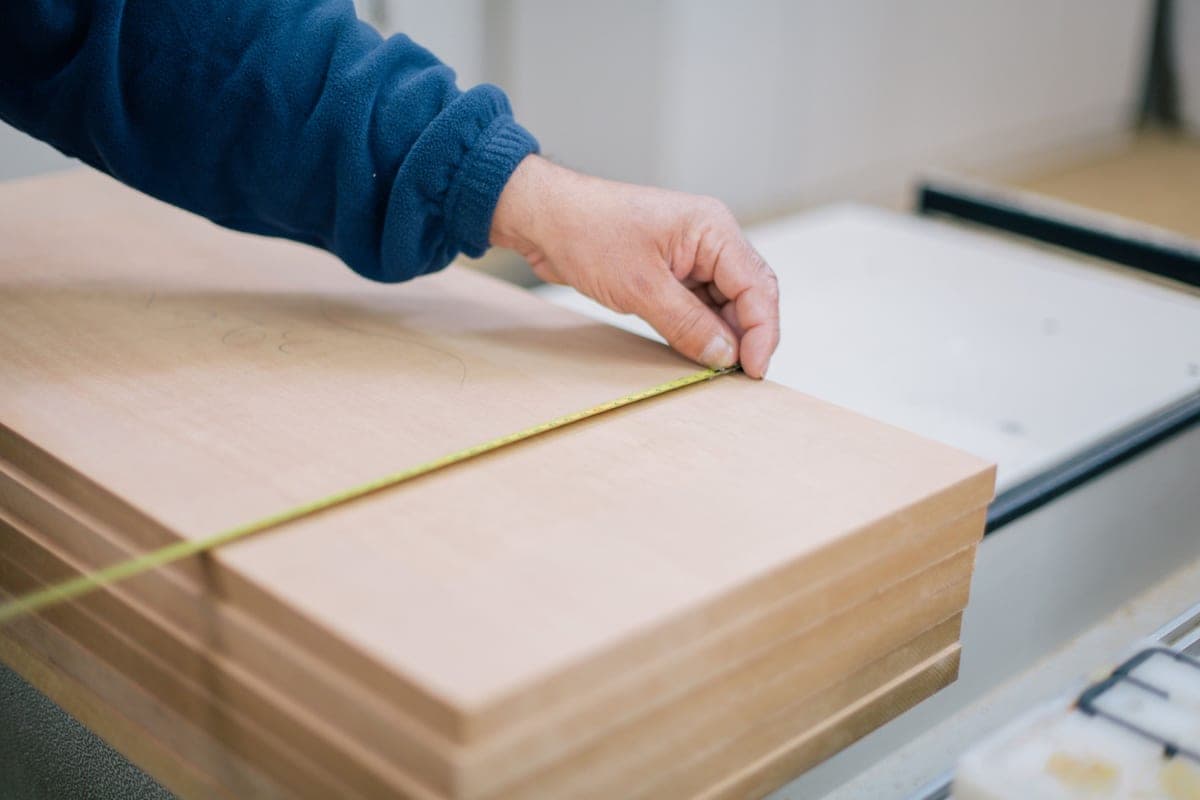
Cabinet nominal sizes describe the carcass. The clear opening is that figure minus the face-frame stiles, the door thickness where it folds back, and on a sink cabinet, the center stile if there is one. On a face-frame cabinet that can be an inch and a half narrower than the number on the label. Manufacturers publish a minimum opening for exactly this reason: simplehuman's 35-liter dual under-counter can needs 20 inches high by 10 wide by 20 deep; the Rev-A-Shelf 4WCSC bottom-mount needs 15 inches wide by 20 and five-eighths high.
Depth is the one that catches people out under a sink, because the trap and the waste pipe eat into the back of the cabinet at exactly the height the buckets need. Measure to the nearest obstruction, not to the back wall. Step-by-step, with the numbers.
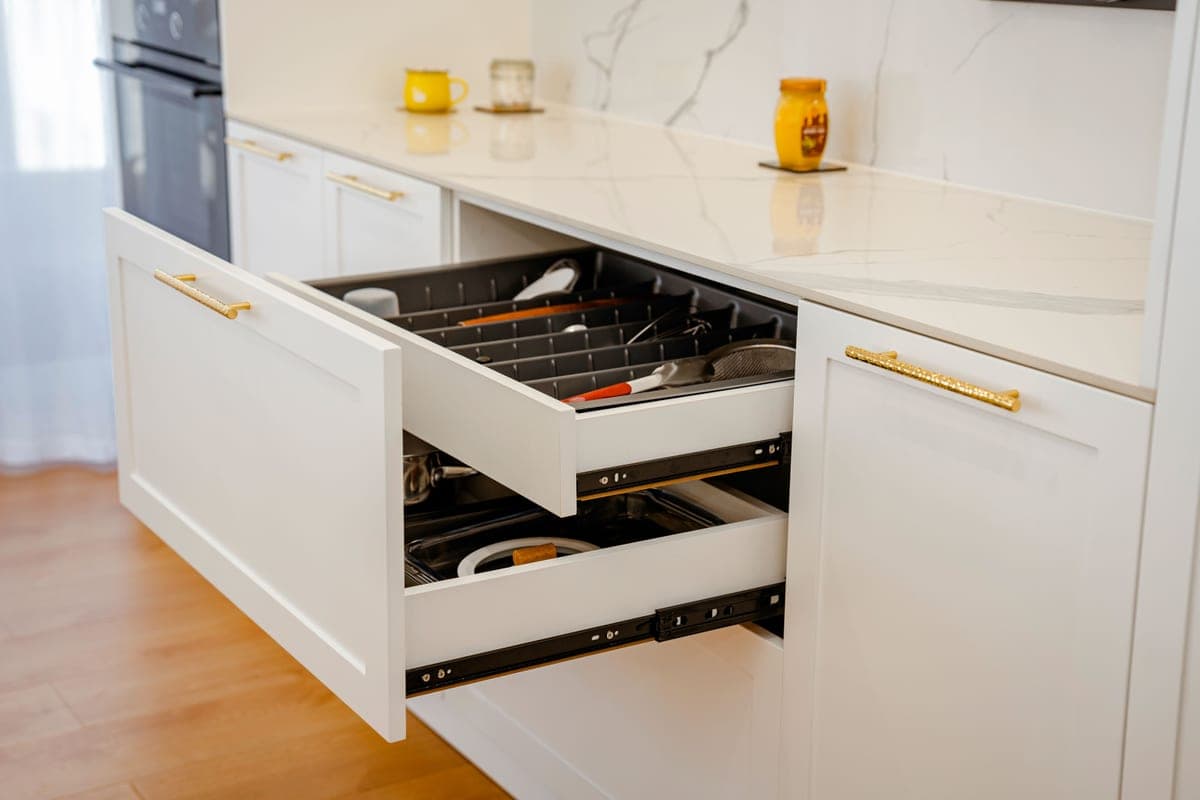
A pull-out hides the can completely, which is the whole appeal, and it keeps the smell inside a closed cabinet. What it costs you is capacity and an install. A 35-quart pull-out bucket is about 8.75 gallons — a third less than a standard kitchen can — and a dual-compartment version halves that again per stream. You will empty it more often.
A slim or narrow can keeps full capacity by putting the volume backwards instead of sideways, needs no install, and moves with you. It is the better answer surprisingly often, and it is the only answer if you rent. Renter-friendly options, including no-drill.
| Pull-out | Slim free-standing | |
|---|---|---|
| Capacity | Usually 30-35 L per bucket | Full 45-50 L |
| Install | Drilling into the cabinet | None |
| Hides the can | Completely | No |
| Odor | Contained in a closed cabinet | Depends on the lid |
| Takes it with you | No | Yes |
| Cabinet space lost | All of it | None |
Two full buckets of trash on a pair of slides is a lot of weight moving a lot of times, and the slides carry all of it. That is why the distinction between a wire frame and a steel-panel frame matters more than the bucket material: a wire frame flexes under load, and that flex is what walks the slides out of alignment over a few years until the drawer binds.
If you are fitting this in a kitchen you intend to keep, the version with genuine Blum Blumotion slides is the one to buy — it is the same hardware that goes into high-end cabinetry and it is serviceable. And before you price a whole replacement kit, check whether you just need a bucket: the container cracks at the handle cut-out long before the frame or the slides wear out, and replacement buckets are sold separately.
Rarely for a double, sometimes for a single. Most double kits need a 15-inch minimum clear opening, and a nominal 12-inch cabinet has an opening well under 12 inches. Measure the clear opening before ordering. How to measure.
A standard pull-out needs screws into the cabinet floor or sides, which most leases do not allow. There are genuinely renter-friendly alternatives that need no drilling at all. Those are here.
Pull-out buckets are quoted in quarts — 35 quarts is about 8.75 gallons. A standard 13-gallon bag fits but overhangs badly, and in a pull-out that overhang catches on the cabinet frame every time the drawer closes and tears. A liner cut to the bucket solves it.
Not usually the opposite of what people expect: a closed cabinet contains odor better than an open kitchen, but it also has no airflow, so anything that leaks sits there. Check the bucket for residue when you change bags, and wipe the cabinet floor occasionally.
Door mount means the cabinet door pulls the bins out with it, so there is one action instead of two — better day to day, but the brackets have to be adjusted carefully at install or the door sits proud of the run. Bottom mount is more forgiving to fit.