Trash can size chart
Gallons to liters to quarts, what each size is actually used for, and which bag matches it. The conversions are shown so you can check them.
By Ryder M. · Last reviewed September 27, 2026
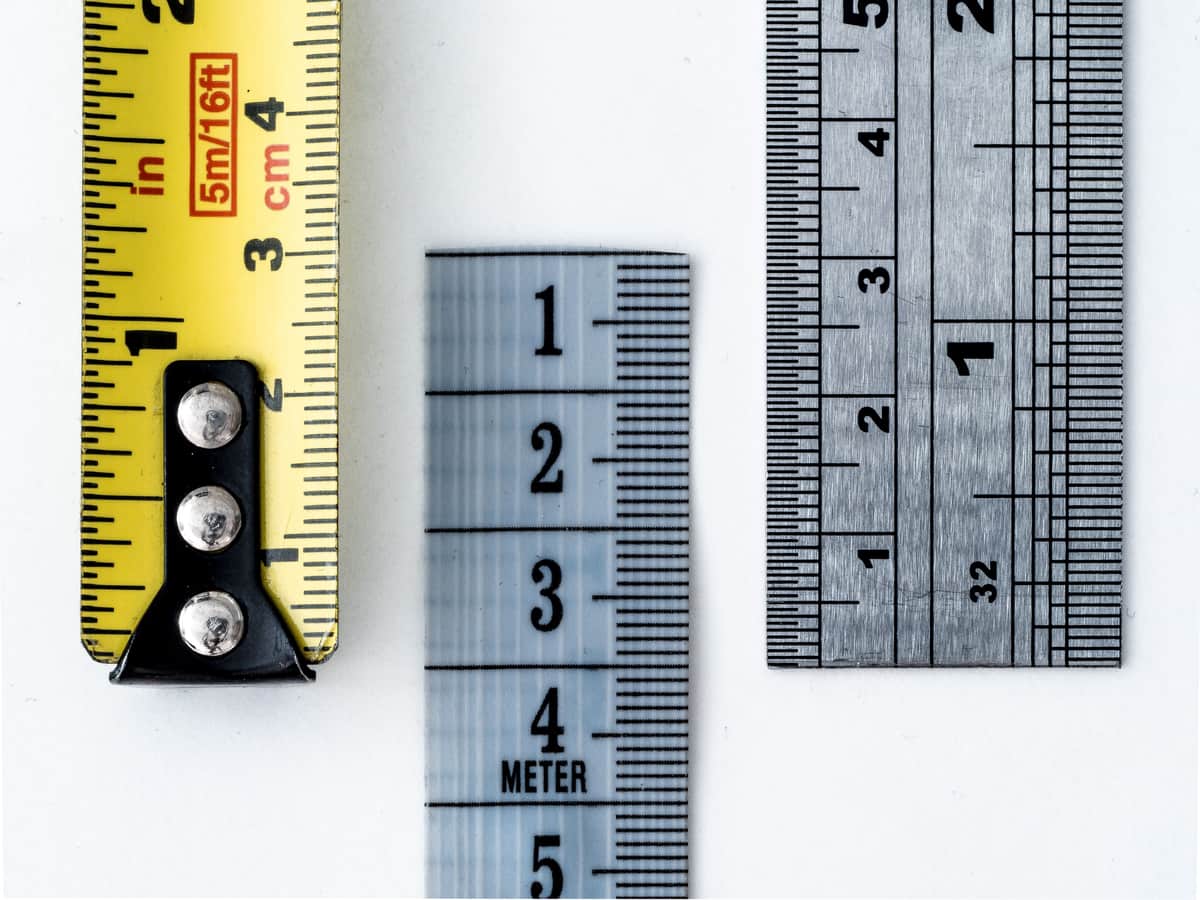
Trash can sizes in gallons, liters and quarts
One US gallon is 3.785 liters and four quarts. Everything in the table below follows from those two conversions, so you can check any row yourself.
| Gallons | Liters | Quarts | Typically used for | Matching bag |
|---|---|---|---|---|
| 1.2 gal | 4.5 L | 4.8 qt | Small bathroom, bedside, office desk | Small bin liners |
| 2 gal | 7.6 L | 8 qt | Bathroom, narrow gaps | Small bin liners |
| 4 gal | 15 L | 16 qt | Larger bathroom, compact recycler | 4-gallon liners |
| 8 gal | 30 L | 32 qt | Under-counter pull-out, small kitchen | 8-gallon liners |
| 8.75 gal | 33 L | 35 qt | Standard cabinet pull-out bucket | 8-10 gallon liners |
| 9.5 gal | 36 L | 38 qt | European-style kitchen bin | Brand-coded liners |
| 11.9 gal | 45 L | 47.6 qt | Mid-size kitchen step can | 13-gallon or coded liners |
| 13 gal | 49.2 L | 52 qt | The American kitchen default | 13-gallon tall kitchen |
| 13.2 gal | 50 L | 52.8 qt | The metric equivalent of a 13-gallon can | 13-gallon tall kitchen |
| 14.5 gal | 55 L | 58 qt | Large kitchen, busy household | 13-gallon, or 20-30 gallon |
| 15.3 gal | 58 L | 61.2 qt | Dual-compartment recycler (total) | Two coded liners |
| 15.8 gal | 60 L | 63.2 qt | Large semi-round kitchen can | Coded liners |
| 16.5 gal | 62.5 L | 66 qt | Utility room, workshop | 20-30 gallon |
| 20 gal | 75.7 L | 80 qt | Garage, utility, small outdoor | 20-30 gallon |
| 32 gal | 121 L | 128 qt | Small curbside cart, commercial round | 33-gallon |
| 39 gal | 147.6 L | 156 qt | Large patio can | 33 or 42-gallon |
| 45 gal | 170.3 L | 180 qt | Wheeled outdoor can | 42-45 gallon contractor |
| 64 gal | 242.3 L | 256 qt | Standard curbside cart, family household | Cart is unlined, or 42-55 gal |
| 96 gal | 363.4 L | 384 qt | Largest curbside cart | Cart is unlined, or 55-65 gal |
How to convert it yourself
Three conversions cover everything in this category, and none of them needs a calculator app.
- Gallons to liters: multiply by 3.785. Thirteen gallons x 3.785 = 49.2 liters.
- Liters to gallons: divide by 3.785. Fifty liters / 3.785 = 13.2 gallons.
- Gallons to quarts: multiply by four. Thirteen gallons = 52 quarts. This is the one you need for cabinet pull-outs, which are almost always quoted in quarts — a 35-quart bucket is 8.75 gallons.
One caution on the metric figures. A US gallon and an imperial gallon are not the same thing: an imperial gallon is 4.546 liters. Every figure on this site is a US gallon, because every product here is sold in the US market. If you are reading a British specification, the same gallon number describes a bigger can.
Which size you actually need
Size to how often you want to empty the can, not to the size of your household. Odor is a function of time and temperature rather than volume, so a smaller can emptied daily smells noticeably less than a larger one emptied every third day.
| You empty it | Household | Buy |
|---|---|---|
| Daily | Any | 8-10 gal / 30-40 L |
| Every 2 days | 2-4 people | 13 gal / 50 L |
| Every 3 days | 2-4 people | 13 gal / 50 L, with food scraps kept out |
| Every 2 days | 5+ people | 15-16 gal / 55-60 L |
| Weekly | Any | No kitchen can copes — move the wet fraction out |
If you compost or run a food caddy, drop one row: the wet organic fraction is a small share of the volume but almost all of the smell, so removing it makes a smaller can viable. Compost bins · the full buying guide.
Measure your own can in ninety seconds
If your can is not in the table — and plenty are not, because manufacturers use non-standard sizes — measure it. Capacity is not the useful number; three dimensions are.
Step 01
Measure the rim circumference
Run a tape around the outside of the rim, where a bag folds over. This is the number that decides whether a bag stays put, and it is the one nobody thinks to take. A typical 13-gallon can lands somewhere around 40 to 48 inches.
Step 02
Measure the internal height
From the floor of the can to the underside of the rim. A bag needs this height plus roughly six to eight inches so there is material to fold over the lip.
Step 03
Measure the internal width at the base
Most cans taper, so the base is narrower than the rim. This is why a bag that fits the rim can still bunch at the bottom, and it is worth knowing before you blame the bag.
With those three numbers you can size a bag properly rather than guessing. The working rule is that a bag's flat width needs to be a little over half the rim circumference to wrap without stretching, and its length needs to be the internal height plus about eight inches. That arithmetic worked through with real bag dimensions.
Outdoor and cart sizes
Outdoor cans follow the same conversions at a bigger scale, but the choice is usually made for you rather than by you. Many American households are on automated collection, where a truck with a mechanical arm grips the cart by its body — and those trucks are built around specific cart profiles, typically 32, 64 and 96 gallons.
So before buying an outdoor can, check what your hauler collects and how. Buying a 96 when your municipality only lifts 64s is an expensive mistake, and buying any cart at all is wasted money if your municipality issues them. Outdoor sizes in detail · our outdoor picks.
Common questions
What are the standard trash can sizes?
In US households: about 2 gallons for a bathroom, 8-10 for an under-counter or small kitchen can, 13 for a standard kitchen can, and 32, 64 or 96 gallons for a curbside cart. Thirteen gallons is by far the most common indoor size.
How many liters is a 13 gallon trash can?
49.2 liters, calculated at 3.785 liters per US gallon. Manufacturers round it to 50, which is why the same can is sold as 13 gallons in the US and 50 liters elsewhere.
How many quarts is a 13 gallon trash can?
Fifty-two, at four quarts to the US gallon. The quart figure matters most for cabinet pull-outs, which are quoted in quarts — a 35-quart bucket is 8.75 gallons.
What size trash can is best for a kitchen?
Thirteen gallons for most two-to-four-person households emptying every couple of days. Smaller if you compost, because the wet fraction has already left. The buying guide.
Is a US gallon the same as an imperial gallon?
No. A US gallon is 3.785 liters and an imperial gallon is 4.546. Every figure on this site is a US gallon. If you are reading a British specification, the same number describes a noticeably bigger can.
What size trash bag matches each can size?
Broadly: 13-gallon tall kitchen bags for 11-14 gallon cans, 20-30 gallon bags for 15-20 gallon cans, 33-gallon for 30-35, and 42-45 gallon contractor bags for 39-45. The fit detail.
Sources
Every specification on this page traces to one of these, checked at the time of writing. Where a manufacturer does not publish a figure, the page says so rather than estimating it.
- Glad Tall Kitchen Drawstring Trash Bags, 13 gal — 0.95 mil, 24" x 27.38"
- Hefty Strong Tall Kitchen Drawstring Trash Bags, 13 gal — 0.9 mil, 23.75" x 27"
- Hefty Strong 13 Gallon Scented Kitchen Trash Bag — 24" x 27.75"
- Plasticplace 13 Gallon Drawstring Trash Bags — 1.2 mil, 24" x 31"
- Plasticplace — trash bag size chart by gallon rating
Read next
- Sizes & BagsSize charts, real dimensions, and the bag-fit matrix that does not exist anywhere else.
- 13-gallon trash can dimensionsReal dimensions by can style, including the lid-open height nobody measures.
- What size trash bag fits a 13-gallon canThe fit matrix with real measured bag dimensions, and the overhang arithmetic.
- The best kitchen trash cans of 2026Seven cans ranked on pedal durability, lid noise and bag fit — not on finish.
- Outdoor trash can sizesWhat each cart size holds, which your hauler lifts, and the practical limits.
- Kitchen trash can buying guideThe five measurements to take and the emptying-habit question that sets the size.
The author
Ryder M.
Owner and editor of Lid & Liner, published by Magoo Media Group. He started the site after getting tired of the same problem everyone has: every “best trash can” article covers ten products and none of them tells you whether a 13-gallon bag actually fits a 13-gallon can. Lid & Liner covers one category and tries to cover it completely.
Last reviewed September 27, 2026. Spotted an error? Tell us and we will correct it and note the correction.