How to measure a cabinet for a pull-out can
Five measurements, ten minutes, and a tape. The one that catches people out is depth — under a sink you measure to the trap, not the back wall.
By Ryder M. · Last reviewed September 27, 2026
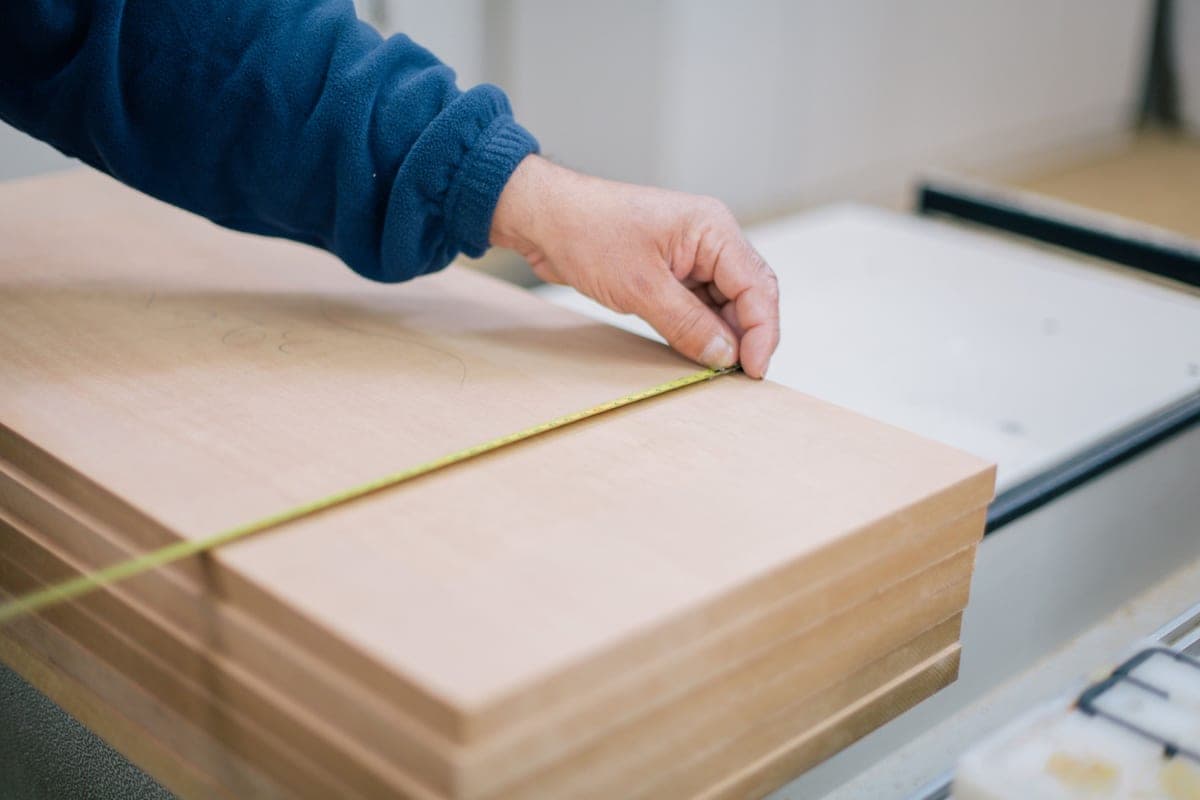
Why the cabinet's size is the wrong number
A cabinet sold as 18 inches describes the carcass. The clear opening — which is what the hardware has to pass through — is that figure minus the face-frame stiles, minus the door thickness where it folds back, and on a sink cabinet minus the center stile if there is one. On a face-frame cabinet that can be an inch and a half narrower.
Manufacturers publish minimum openings precisely because of this, and the two worth knowing are the numbers we will check against throughout this page:
| Product | Minimum clear opening |
|---|---|
| simplehuman 35L dual under-counter pull-out | 20" H x 10" W x 20" D |
| Rev-A-Shelf 4WCSC-1835DM-2 (2 x 35 qt) | 15" W x 20-5/8" H |
The five measurements
Step 01
Clear opening width
Open the cabinet door fully. Measure between the inside faces of the frame at the narrowest point, which on a face-frame cabinet is between the stiles. Do not measure the cabinet's external width and do not measure between the door hinges. If there is a center stile between two doors, measure to it — that is your limit, and it is what rules out most double pull-outs in a sink cabinet.
Step 02
Clear opening height
From the cabinet floor to the underside of the frame rail at the top of the opening, or to the underside of the counter if there is no rail. This is what the frame and the buckets have to pass under, and it is why 20 to 21 inches is the figure the manufacturers quote.
Step 03
Depth to the nearest obstruction
The one that catches people out. In a sink cabinet, measure from the inside of the door to the front of the trap or the waste pipe, at the height the buckets will occupy — not to the back wall. The plumbing eats into the cabinet at exactly the wrong height. If the trap is central and low, a bottom-mount frame may pass under it; if it is at bucket height, it is your depth limit.
Step 04
Cabinet floor condition and thickness
Not a dimension, but the measurement that decides whether the install holds. The whole load goes through screws into the base. Press it: if it flexes, or if the particleboard is swollen or crumbly from a past trap leak — extremely common in sink cabinets — it needs repairing or reinforcing first. A pull-out fitted to soft board works loose within a year.
Step 05
Clearance in front of the cabinet
The unit extends forward when open, and simplehuman states up to three feet of extension on its 35-liter dual. In a galley kitchen, check that an open pull-out plus a person does not block the walkway, and that it does not foul an oven door or a dishwasher door opening at the same time.
Where the plumbing gets in the way
Under a sink, the trap is the whole problem, and there are three configurations with three different answers.
| Trap position | Effect | Option |
|---|---|---|
| Central and high, close under the basin | Often clears a bucket entirely | A standard bottom-mount double may fit |
| Central and low | Blocks the middle of the cabinet at bucket height | A single bucket to one side, or a shallower unit |
| Offset to one side | Leaves usable depth on the other side | A single, positioned away from the trap |
| A waste disposal unit fitted | Takes a large volume low and central | Usually rules out a pull-out entirely |
If the plumbing rules it out — and with a disposal unit it usually does — the honest alternatives are a pull-out in a different cabinet (the one beside the sink is often better anyway, because it has no plumbing in it), or a narrow freestanding can in a gap. Moving the can to the next cabinet along is the option people overlook.
Check your numbers against a product
Now compare. Write your five figures down and check them against the published minimum for whatever you are considering, with a margin.
- Allow half an inch of margin on width. A frame that exactly matches the opening is a frame you cannot get square.
- Allow an inch on height. You have to lift the buckets out past the top rail, and doing that at exactly the minimum is a daily annoyance.
- Allow two inches on depth past the trap. Pipework is not straight and you need room to work.
- If you are within margin on two or more dimensions, buy the single-bucket version rather than the double. A single that fits properly is better than a double that binds.
The three units whose published minimum openings we have cited: the dual, the single-bucket version for tighter cabinets, and the Blum-slide double for a 15-inch opening.
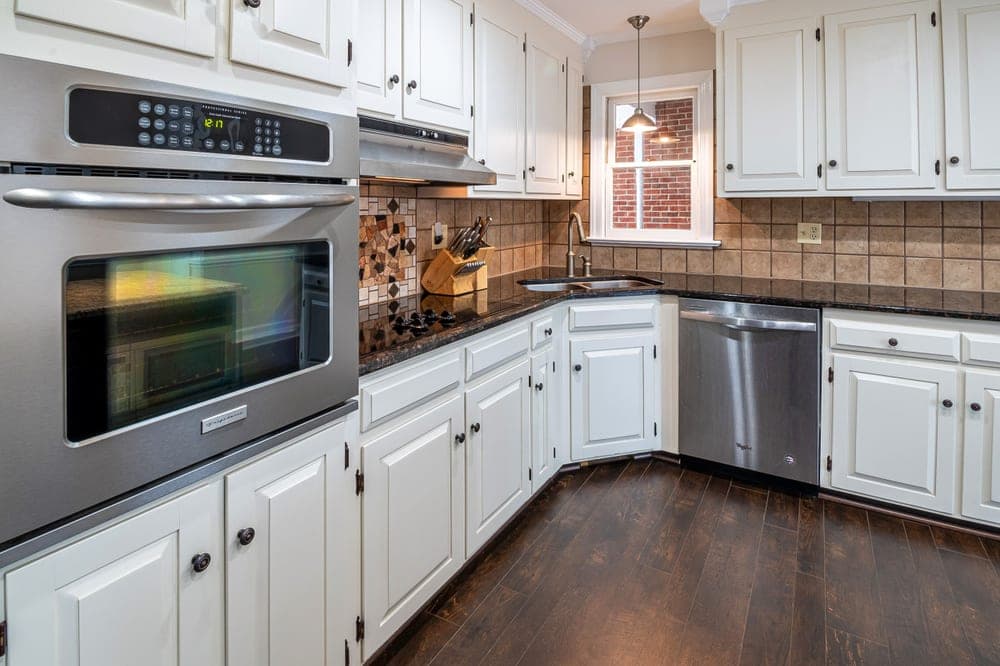
Best pull-out overall
simplehuman 35L Dual Compartment Under-Counter Pull-Out Can
The pull-out that is easiest to install and hardest to break: an all-steel frame on commercial ball-bearing tracks that arrive as one pre-assembled piece.
Best single-bucket pull-out
simplehuman 30L Under-Counter Pull-Out Can
The single-bucket version, for a household that recycles elsewhere and wants all the cabinet volume for trash.
Best slides
Rev-A-Shelf 4WCSC-1835DM-2 Bottom-Mount Double, 2 x 35 Quart
The version fitted with real Blum Blumotion heavy-duty slides — the same hardware that goes into high-end cabinetry.
Once it is fitted, the things that make it last are here — particularly re-tightening the fixings at six months, which is what prevents the misalignment that eventually makes a drawer bind.
Common questions
How do I measure a cabinet for a pull-out trash can?
Measure the clear opening width at its narrowest point, the clear opening height, and the depth to the nearest obstruction — under a sink that is the trap, not the back wall. Also check the cabinet floor is sound and that the unit has room to extend.
Will a pull-out trash can fit a 12 inch cabinet?
A double, almost never — most need a 15-inch clear opening and a nominal 12-inch cabinet has an opening well under 12 inches. A single-bucket unit sometimes fits. Measure the clear opening, not the cabinet.
What is the minimum cabinet opening for a pull-out trash can?
It depends on the product, which is why the published figures matter: simplehuman states 20" H x 10" W x 20" D for its 35L dual, and Rev-A-Shelf's 4WCSC needs 15" W x 20-5/8" H.
Can you fit a pull-out trash can with a garbage disposal?
Usually not in that cabinet — a disposal unit takes a large volume low and central, exactly where the buckets need to be. Consider the cabinet next to the sink instead, which typically has no plumbing in it.
How much space do you need in front of a pull-out?
Enough for the unit to extend fully plus a person. simplehuman states up to three feet of extension on its 35L dual. In a galley kitchen, check it does not clash with an oven or dishwasher door.
What if my cabinet floor is water damaged?
Repair or reinforce it before fitting anything. The entire load goes through screws into the base, and swollen particleboard from a past trap leak will not hold — the unit works loose within a year.
Sources
Every specification on this page traces to one of these, checked at the time of writing. Where a manufacturer does not publish a figure, the page says so rather than estimating it.
Read next
- Pull-Out & Slim CansUnder-sink pull-outs, narrow cans, cabinet hardware, and how to measure first.
- The best under-sink pull-out trash cansSix pull-outs compared on slides, frames and the openings they actually need.
- The best cabinet pull-out hardwareHardware and spares, and how to tell which frame you already have.
- The best slim and narrow trash cansSix narrow cans that keep capacity by going deep rather than wide.
- Renter-friendly under-sink trash cansFive no-drill approaches ranked, including the two not worth bothering with.
- Where to put a trash can in a small kitchenEight placements that work, ranked, and the two that always go wrong.
The author
Ryder M.
Owner and editor of Lid & Liner, published by Magoo Media Group. He started the site after getting tired of the same problem everyone has: every “best trash can” article covers ten products and none of them tells you whether a 13-gallon bag actually fits a 13-gallon can. Lid & Liner covers one category and tries to cover it completely.
Last reviewed September 27, 2026. Spotted an error? Tell us and we will correct it and note the correction.