Renter-friendly under-sink trash cans
A standard pull-out needs screws into the cabinet floor. Five approaches that do not — ranked honestly, including the two that are not worth bothering with.
By Ryder M. · Last reviewed September 27, 2026
The constraint
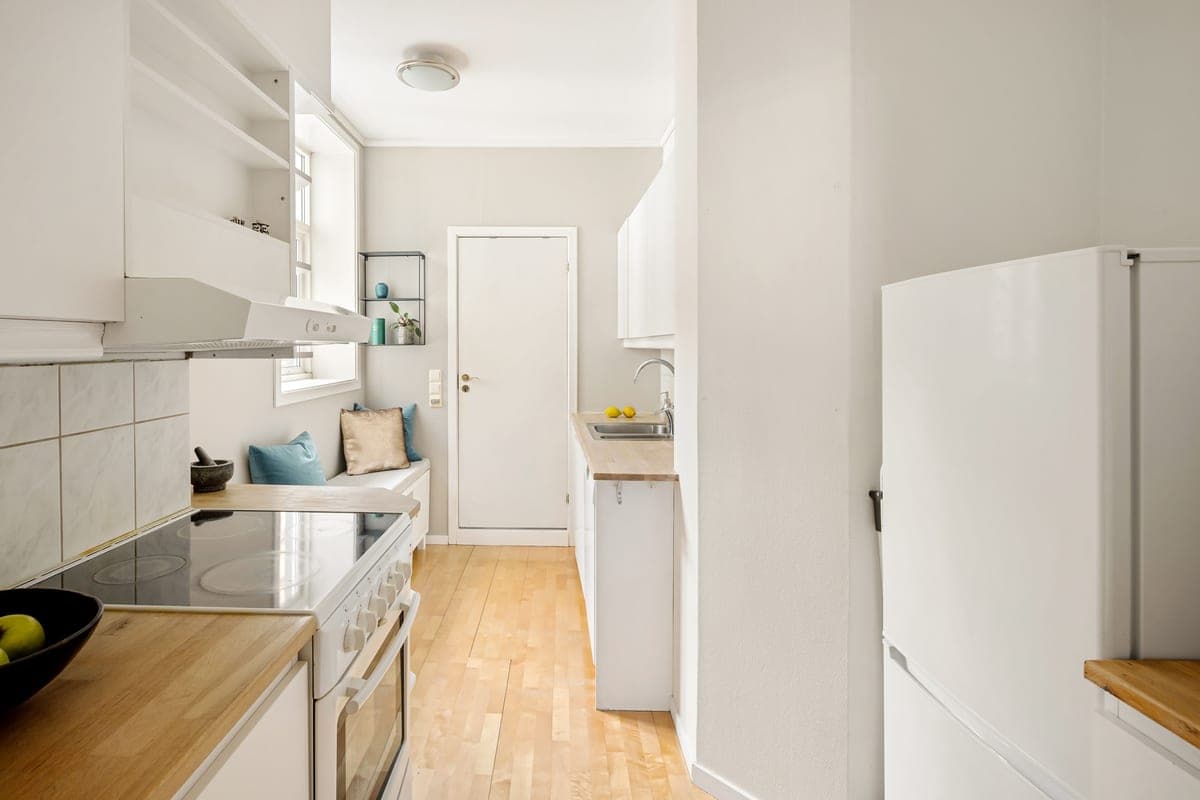
Every proper pull-out fixes to the cabinet with screws, usually into the base. Most leases prohibit that, and even where they do not, the load a pull-out puts through those screws leaves holes that are hard to make good.
So the question is not which pull-out to buy, it is which of several genuinely different approaches to take — and the honest answer for a lot of renters is that a freestanding can is better than any of the workarounds. We have ranked them below with that in mind.
The five approaches, ranked
1. A narrow freestanding can in a gap (the best answer)
It keeps full capacity, needs no install at all, and comes with you when you move. The gap beside the refrigerator is the most underused space in most rented kitchens, and a slim can puts a genuine 45 liters in it. Yes, the can is visible — but it is visible in a slot rather than in the middle of the floor, and you have lost nothing to get there.
2. A door-hung bin inside the cabinet
Hooks over the top edge of a cabinet door or fixes with a bracket that only touches the door edge. Genuinely useful for food scraps while you prep, genuinely too small for household trash — these are typically 10 to 20 liters. Treat it as a caddy rather than a can. And check the door: a hollow-core or thin MDF door will sag over time under a swinging load.
3. A can on a lipped tray or a pull-out mat
A small can standing on a tray or non-slip mat inside the cabinet, which you pull forward by hand. No hardware, no fixings, fully reversible. It is not a pull-out mechanism — you are reaching into the cabinet and sliding it — but it keeps the can out of sight and contains any leak in the tray, which is the part that actually protects your deposit.
4. A tension-rod arrangement
Sometimes suggested: a spring tension rod across the cabinet with a bin hung from it. We would not. Tension rods are rated for a curtain, the load of a filled bin is well beyond that, and when it lets go the mess is inside a cabinet you are responsible for. Mentioned here because it circulates widely, not because we recommend it.
5. Adhesive-mounted hardware
Also not recommended. Adhesive mounts genuinely can hold static weight, but a pull-out bin is a dynamic load with a shock at the end of every closing stroke, and heat and humidity under a sink work against the adhesive. When it fails it takes the cabinet veneer with it, which is a worse outcome than a few screw holes would have been.
What to buy for each approach
For the freestanding route, which is the one we would actually take: a full-capacity slim step can, the narrowest small can we found at 6.5 inches, and an open-top slim can for paper and packaging.

Best narrow full-size can
simplehuman 45L Slim Step Can
Full kitchen capacity in a can narrow enough to live in the gap beside a fridge or at the end of a run of cabinets.

Best narrow small can
Umbra Skinny Trash Can, 2 Gallon
Six and a half inches wide, which is the number that matters when the only space is between the toilet and the wall.
Best open-top
simplehuman 50L Slim Open Top Can
Heavy-gauge stainless with no lid and no pedal, for the spot where speed matters more than odor containment.
If you want the can hidden and are going the tray route, look for the smallest can that fits the cabinet with the door closed — measure the clear opening, because a cabinet sold as 18 inches has an opening well under that. How to measure.
Protecting your deposit
Four habits that matter more than which can you buy, because the damage that costs renters money in this category is almost never the can itself.
- Put anything inside a cabinet on a lipped tray. A bag that leaks onto a particleboard cabinet floor swells it permanently, and that is a repair rather than a clean. A cheap boot tray solves it.
- Check under the sink monthly. Sink cabinets get damp from the trap as well as from the bin, and the two together destroy particleboard. Finding a slow leak early is the whole game.
- Do not put the can next to the dishwasher, even in a rental where the layout is fixed. Heat and damp make the can smell and the damp does the floor no favors. Placement options.
- Keep the wet fraction out of the can entirely. Food scraps to the freezer or a countertop caddy. Fewer leaks, less smell, and nothing soaking into anything.
And if the kitchen already smells when you move in, that is worth dealing with before you decide it is your can: residue on a cabinet floor from a previous tenant's leaking bin is a genuinely common cause. How to find and clear it.
Common questions
Can renters install an under-sink pull-out trash can?
A standard pull-out needs screws into the cabinet, which most leases forbid. Ask your landlord in writing first — many agree, since it is a fixture that improves their kitchen. Otherwise use a freestanding slim can.
What is the best no-drill under-sink trash can?
Honestly, a narrow freestanding can in a gap rather than anything inside the cabinet. It keeps full capacity, needs no install, and moves with you. Second best is a small can on a lipped tray inside the cabinet.
Do adhesive-mounted pull-out bins work?
We would not use one. A pull-out is a dynamic load with a shock at the end of every stroke, and heat and humidity under a sink work against the adhesive. When it fails it takes the cabinet veneer with it.
Can I hang a trash can on a cabinet door?
Yes, and it is genuinely useful for food scraps while you prep — but at 10 to 20 liters it is a caddy, not a household can. Check the door first: a hollow-core or thin MDF door will sag under a swinging load.
Will a tension rod hold a hanging trash bin?
No, and we would not try it. Tension rods are rated for a curtain, and a filled bin is well beyond that. When it lets go the mess is inside a cabinet you are responsible for.
How do I stop a trash can damaging a rented cabinet?
Stand anything inside a cabinet on a lipped tray, check under the sink monthly for trap leaks, and keep food waste out of the can entirely. A leak onto particleboard swells it permanently and that is a repair, not a clean.
Read next
- Pull-Out & Slim CansUnder-sink pull-outs, narrow cans, cabinet hardware, and how to measure first.
- The best slim and narrow trash cansSix narrow cans that keep capacity by going deep rather than wide.
- The best under-sink pull-out trash cansSix pull-outs compared on slides, frames and the openings they actually need.
- How to measure a cabinet for a pull-out canFive measurements with real published minimums to check them against.
- Where to put a trash can in a small kitchenEight placements that work, ranked, and the two that always go wrong.
- How to stop trash can smellSeven steps in order, free ones first, plus the three places residue hides.
The author
Ryder M.
Owner and editor of Lid & Liner, published by Magoo Media Group. He started the site after getting tired of the same problem everyone has: every “best trash can” article covers ten products and none of them tells you whether a 13-gallon bag actually fits a 13-gallon can. Lid & Liner covers one category and tries to cover it completely.
Last reviewed September 27, 2026. Spotted an error? Tell us and we will correct it and note the correction.