64 vs 96 gallon trash cans
Two carts, one decision, and it is not really about how much trash you make. It is about whether you can steer the thing down your driveway when it is full.
By Ryder M. · Last reviewed September 29, 2026
Lid & Liner is reader-supported. If you buy through a link on this page we may earn a commission at no extra cost to you. It never changes which product we rank first — how we pick and how we make money.
The verdict, first
Take the 64 unless you are currently putting a second can or loose bags at the curb every week. Take the 96 if you are, and only if your path to the curb is flat and wide. Almost everyone who regrets their choice regrets going bigger, and the reason is never capacity — it is the slope of the driveway.
| # | Product | Best for | Price |
|---|---|---|---|
| 01 | 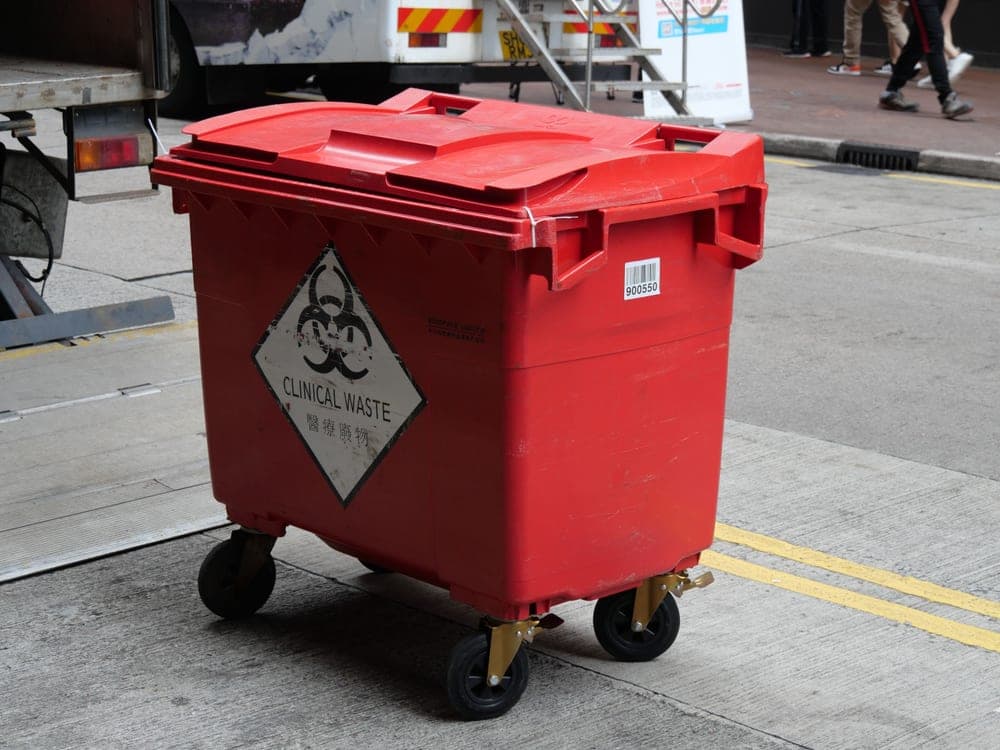 Toter Heavy Duty Two-Wheel Trash Cart, 64 GallonThe cart most municipalities issue, sold retail: rotationally molded, ten-year warranty, and a lid hinged to the body. | Best outdoor cart overall | |
| 02 | Toter Heavy Duty Two-Wheel Trash Cart, 96 GallonThe 96-gallon cart: the biggest size most automated collection trucks will lift, for households that fill a 64 every week. | Best large capacity |
Both sizes are standard, both are lifted by the same automated truck arm, and both are the same product in the same material with the same warranty. The 96 is not a better cart. It is a taller one.
The two sizes side by side
| 64 gallon | 96 gallon | |
|---|---|---|
| Typical household fit | 2-4 people, weekly collection | 5+ people, or a yard |
| Roughly equivalent to | About four 13-gallon bags | About six 13-gallon bags |
| Steering when full | Manageable for most adults | Genuinely heavy |
| Driveway slope | Forgiving | Unforgiving |
| Storage footprint | Smaller | Noticeably wider and taller |
| Automated lifter | Yes | Yes |
| Construction (Toter) | Rotationally molded, seamless | Rotationally molded, seamless |
| Warranty (Toter) | 10 years | 10 years |
Why the 96 catches people out
Weight is the whole problem
A cart is a lever on two wheels. Tilting it takes a fraction of the load, but controlling it on a slope takes all of it, and a full 96-gallon cart is half as heavy again as a full 64. On a flat, wide drive that does not matter. On a sloped one, or a gravel one, or a set of steps, it is the difference between a chore and an incident.
It does not fit where the old can went
The 96 is both wider and taller, and the usual storage spot — a side return, a gate gap, the space between the house and a fence — is often sized for something smaller. Measure the gap and the gate before you order, not after.
Your hauler may not take it
Plenty of municipalities issue a specific cart and will only lift that one, and some cap the size they will service. If your collection is contracted rather than municipal, check the size rules first — a cart your hauler will not lift is a very large planter.
A fuller cart is a smellier cart
Odor is driven by time and temperature rather than volume, so a bigger cart that sits a full week in July smells worse than a smaller one that is full by Thursday. If you go to 96, plan on a deodorizer and an occasional rinse.
When the 96 is clearly right
Three cases, and they are specific.
You are already putting out two cans. One 96 costs less than two 64s, takes less driveway, and is emptied in one truck lift rather than two. If your second can is a permanent fixture rather than a Christmas-week event, this is the straightforward case for upsizing.
You have a yard and no green-waste collection. Grass clippings and leaves are bulky and light, which is exactly the load a big cart handles well — you are filling volume rather than adding weight, so the steering problem never appears.
Collection is fortnightly. Two weeks of a four-person household's waste does not fit in a 64, and the overflow ends up in bags beside the cart, which is how raccoons get involved. If that is already happening, read this first.
When the 64 is clearly right
Also three, and they cover most households.
Your driveway slopes, is gravel, or has a step. This overrides every capacity argument on the page. A cart you cannot control when it is full is a cart you will come to hate, and you will be moving it fifty-two times a year.
You recycle and compost. Taking packaging and food waste out of the landfill stream typically halves what goes in the cart, and a 64 then sits half empty. Sizing by what is actually left.
Storage is tight. The 64 fits gaps the 96 does not, and a cart that lives out front because it will not fit down the side is a cart you will look at every day.
Buy A if, buy B if
| Take the 64 if | Take the 96 if |
|---|---|
| Your drive slopes or is gravel | Your path to the curb is flat and wide |
| You recycle and compost | You are already putting out two cans |
| Storage down the side is tight | You have a yard and no green-waste pickup |
| One adult moves the cart | Collection is every two weeks |
| Two to four people | Five or more people |
| Summer heat is a problem | You can rinse the cart occasionally |
Whichever you choose, a strap over the lid costs a fraction of the cart and solves the single most common outdoor failure. The lid locks and straps we would buy.
Common questions
Is a 64 or 96 gallon trash can better?
The 64 for most households. The 96 is only better if you are already putting a second can at the curb, and only if your path to the curb is flat - a full 96-gallon cart is genuinely hard to control on a slope.
How many bags fit in a 64 gallon trash can?
Roughly four 13-gallon kitchen bags, uncompacted. A 96-gallon cart takes about six. Both figures assume the bags are not crushed down, which in practice they usually are, so treat them as a floor.
How heavy is a full 96 gallon trash can?
Heavy enough that it is the main reason people regret the size. The weight depends entirely on what is in it, but a 96 full of household waste is about half again as heavy as a full 64, and that difference only shows up on a slope.
Will my hauler take a 96 gallon cart?
Usually, but not always. Many municipalities issue a specific cart and will only lift that one, and some contracted haulers cap the size they will service. Check before you buy.
What size cart do I need for a family of five?
A 96 if you do not recycle or compost, and often a 64 if you do. Count how many bags you currently put out each week rather than counting people - that is the number that predicts the right size.
Can I use two 64 gallon carts instead of one 96?
You can, and it is easier to steer, but it takes more driveway and two truck lifts. If storage is the constraint, two smaller carts often fit where one large one does not.
Sources
Every specification on this page traces to one of these, checked at the time of writing. Where a manufacturer does not publish a figure, the page says so rather than estimating it.
Read next
- Outdoor Trash CansCurbside carts, animal-proofing, enclosures and the sizes your hauler accepts.
- Outdoor trash can sizesWhat each cart size holds, which your hauler lifts, and the practical limits.
- The best 96 gallon trash cansThree carts at the largest standard curbside size, ranked on build and how they steer when full.
- The best outdoor trash cansSix outdoor cans on construction, lid design and what your hauler will lift.
- The best trash can lid locks and strapsFour straps and locks on fit range, materials and winter survival.
- The best outdoor trash cans with wheelsFive wheeled cans on construction, warranty and the axle that actually fails.
The author
Ryder M.
Owner and editor of Lid & Liner, published by Magoo Media Group. He started the site after getting tired of the same problem everyone has: every “best trash can” article covers ten products and none of them tells you whether a 13-gallon bag actually fits a 13-gallon can. Lid & Liner covers one category and tries to cover it completely.
Last reviewed September 29, 2026. Spotted an error? Tell us and we will correct it and note the correction.