How to keep a trash can from smelling in the garage
A garage is the worst place in the house for a trash can: hot, unventilated, and the can sits a full week. Here is what actually helps.
By Ryder M. · Last reviewed September 27, 2026
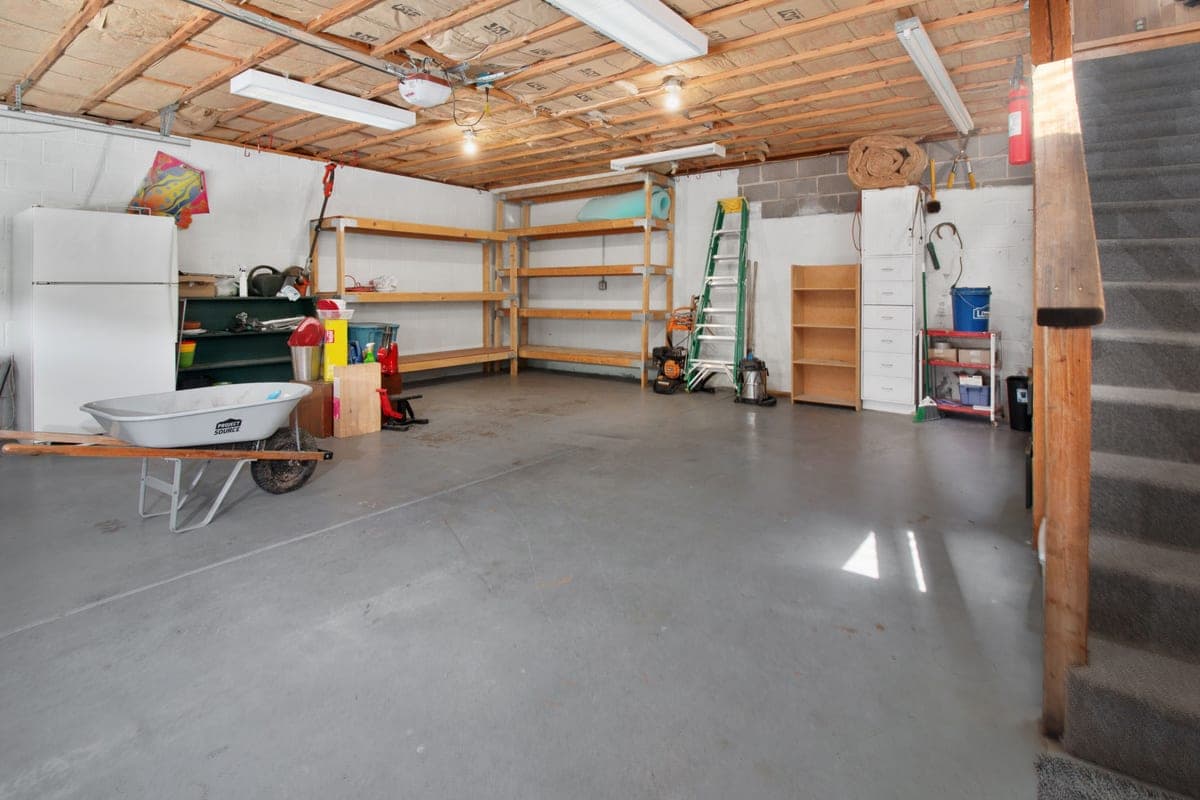
Why a garage is the worst case
Odor needs warmth, damp, organic matter and time. A garage supplies three of those generously and removes the one thing that would help: airflow.
- Heat. An attached garage with a closed door and a west-facing wall runs considerably hotter than the house in summer, and bacterial activity roughly doubles with each meaningful rise in temperature.
- No ventilation. Most garages have no extract at all. Odor produced in a garage stays in the garage, concentrating over a week.
- Time. A garage can is almost always the can that waits for collection day. Seven days at garage temperature is the worst combination in the list.
- A door into the house. Which is why you notice it. An outdoor can smells just as much and nobody cares, because the smell disperses.
The consequence is that garage odor is usually a ventilation and timing problem rather than a can problem, and the fixes that work are different from the ones that work in a kitchen.
Seven fixes, cheapest first
Step 01
Keep meat, fish and dairy out of the garage can entirely
Freeze them and put them out on collection morning. This is the single biggest change and it costs nothing. The wet protein fraction is what produces the worst compounds, and removing it from a week-long hold transforms the situation.
Step 02
Move the can away from the wall shared with the house
Odor concentration is highest near the source. Moving the can to the far side of the garage, and specifically away from the door into the house, makes a noticeable difference for zero cost.
Step 03
Get it out of the sun
If any part of the garage gets direct sun through a window or an open door in the afternoon, the can should not be there. Put it against the coolest wall, usually the one shared with the ground or the north side.
Step 04
Wash the can — including the base and the floor under it
Garage cans almost never get washed, and a year of residue in the base is doing most of the work. Hose it out, scrub it, dry it in the sun. Check the garage floor underneath while the can is out; liquid pools there and stays. Full method.
Step 05
Give the garage some airflow
Leave the garage door open a few inches when you are home, or fit a simple vent if the structure allows. Even a small amount of cross-ventilation stops the concentration building over a week. This is the fix that most directly addresses the actual mechanism.
Step 06
Use a baking soda powder over each bag
Not a pod — a garage can is too big a volume for a lid pod to matter. A powder applied to the surface of each bag as it goes in works where the odor is being produced. Which deodorizers do what.
Step 07
Then consider a can with a latching lid, or moving it outside
A lid that latches rather than resting on a rim contains more. And if the garage genuinely cannot be ventilated, the honest answer may be an outdoor can in shade — where the smell disperses instead of accumulating. Outdoor cans.
If you move it outside instead
This solves the odor problem completely and introduces a different one: animals. In a garage, a raccoon cannot reach the can. Outside, it can.
The mitigation is straightforward and cheap. A can with an attached hinged lid removes the easy win — a raccoon cannot knock a lid off a can when the lid is part of the can — and a tensioned strap defeats the levering technique they use instead. A strap on the can you already own costs a fraction of a new can and is worth trying first. Straps and lid locks compared · the full raccoon picture.
The other consideration is wheels. A can that lives outside has to be moved to the curb, and a full 64-gallon cart is heavier than people expect. Wheeled outdoor cans.
If you move the can outside: a cart with an attached hinged lid, a strap sized for it, and a powder for the residue smell that attracts animals in the first place.
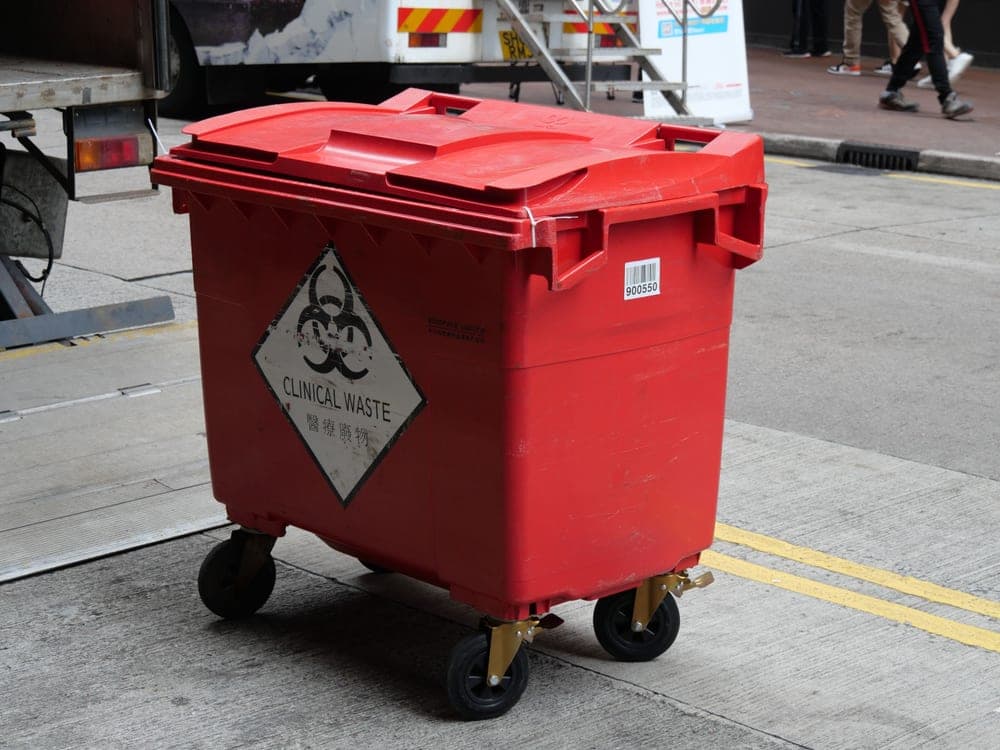
Best outdoor cart overall
Toter Heavy Duty Two-Wheel Trash Cart, 64 Gallon
The cart most municipalities issue, sold retail: rotationally molded, ten-year warranty, and a lid hinged to the body.

Best for wheeled carts
Encased Extra Large Trash Can Lock (50-96 gallon cans)
The long version, sized for the 64 and 96-gallon wheeled carts a standard strap will not reach around.

Best for outdoor cans
Arm & Hammer Trash Can & Dumpster Deodorizer, 42.6 oz
Baking soda in a sprinkle-top jar, sized for the outdoor can where a lid pod would be pointless.
Special cases
Dog waste in the garage can
This is the commonest specific complaint, and it is an ammonia problem rather than a rotting one. Ammonia is sharp, it travels, and fragrance masks it particularly badly. Dog waste should not sit in a garage for a week. Either put it out in the main can on collection morning only, or use a dedicated outdoor arrangement. Options for dog waste.
Recycling in the garage
Dry recycling should not smell at all. If it does, something in it was not rinsed — a beer bottle, a juice carton, a jar with a film of jam. Rinsing recycling is also what stops fruit flies breeding in it.
It smells even with an empty can
Then the source is the can itself or the floor. Residue in the base of a can that has never been washed, or a patch of dried liquid on the concrete underneath it. Concrete is porous and holds it. Scrub the floor with hot soapy water, rinse, and let it dry fully.
Common questions
How do I keep my trash can from smelling in the garage?
Keep meat, fish and dairy out of it — freeze them until collection morning — move the can away from the door into the house and out of any sun, wash it, and get some airflow into the garage. Those five are free and they address the actual mechanism.
Why does my garage trash can smell so much worse?
A garage compounds every condition: heat, no ventilation, and a can that sits a full week rather than being emptied every two days. Odor produced in a garage stays in the garage and concentrates.
Should I keep the trash can in the garage or outside?
Outside solves the odor problem completely, because the smell disperses. It introduces an animal problem, which a can with an attached hinged lid plus a tensioned strap handles for far less than the cost of a new can.
What deodorizer works in a garage trash can?
A baking soda powder sprinkled over each bag. A lid pod is designed for a 50-liter kitchen headspace and does very little in a large can standing in a big room.
Why does my garage smell even when the can is empty?
Residue in the base of a can that has never been washed, or dried liquid on the concrete underneath it. Concrete is porous and holds it — scrub the floor with hot soapy water and let it dry fully.
Can I put dog waste in the garage trash can?
You can, but it is the worst thing to leave in a garage for a week — ammonia is sharp, it travels, and fragrance masks it badly. Put it out on collection morning only, or use a dedicated outdoor arrangement.
Read next
- Odor ControlThe free fixes first, then filters, deodorizers and cans built to contain smell.
- How to stop trash can smellSeven steps in order, free ones first, plus the three places residue hides.
- The best outdoor trash cans with wheelsFive wheeled cans on construction, warranty and the axle that actually fails.
- The best trash can deodorizersFour deodorizers, separated by mechanism: adsorb, neutralize or mask.
- The best trash cans for dog poopFive options, including the digester that removes the storage problem entirely.
- How to clean a trash canThe full method, including the underside of the rim everyone misses.
The author
Ryder M.
Owner and editor of Lid & Liner, published by Magoo Media Group. He started the site after getting tired of the same problem everyone has: every “best trash can” article covers ten products and none of them tells you whether a 13-gallon bag actually fits a 13-gallon can. Lid & Liner covers one category and tries to cover it completely.
Last reviewed September 27, 2026. Spotted an error? Tell us and we will correct it and note the correction.