How often should you take out the trash?
Every other day for a kitchen can, and daily in summer or whenever anything wet or animal went in. The interval is set by temperature and contents, not by how full the can looks.
By Ryder M. · Last reviewed October 6, 2026

Lid & Liner is reader-supported. If you buy through a link on this page we may earn a commission at no extra cost to you. It never changes which product we rank first — how we pick and how we make money.
The short answer
Empty a kitchen can every other day as a habit, and daily if the weather is warm or anything wet, meaty or animal went in it. Bathroom cans can go weekly. Office and paper bins can go fortnightly. The useful rule is that the clock starts when the first wet thing goes in the bag, not when the bag reaches the top - a half-full can with chicken trimmings in it is more urgent than a full one of cardboard.
Most people run on the other rule - empty it when it is full - which is why kitchen cans smell. It is also why buying a bigger can usually makes the smell worse rather than better: a bigger can takes longer to fill, so the oldest waste in it is older.
Why temperature sets the interval
The smell from a trash can is the metabolic output of bacteria working on organic residue. Bacterial activity roughly doubles for every ten degrees of warmth, which is why the same waste that is inoffensive for three days in February is unpleasant in one in July. Nothing about the can changes between those two months; the arithmetic does.
| Conditions | Kitchen can interval | Why |
|---|---|---|
| Winter, cool kitchen | Every 2-3 days | Slow bacterial activity |
| Normal, nothing wet in the bag | Every 2 days | The default |
| Summer, or a warm kitchen | Daily | Activity doubles with every 10 degrees |
| Fish, chicken or meat trimmings | Same day | The worst input there is |
| Diapers or cat litter | Daily | Ammonia, and it builds fast |
| Dry waste only - packaging, paper | Weekly is fine | Nothing for bacteria to work on |
A schedule by room
- Kitchen: every other day, daily in summer. Change the liner even if the bag is not full - the liner costs pennies and the bag is where the residue is.
- Bathroom: weekly, on a day you will remember. Bathroom waste is mostly dry; the exception is anything with blood or organic matter, which goes same day.
- Nursery or diaper pail: daily, and empty the pail completely rather than topping it up. Diaper pails versus trash cans.
- Cat litter: scoop daily, empty the disposal pail every few days, and keep it out of the kitchen can. Cans for cat litter.
- Home office or bedroom: fortnightly. Keep food out of these and they will never need more.
- Garage: weekly in summer, fortnightly in winter, and never put food waste in a garage can at all. Garage can smell.
- Outdoor cart: whenever the hauler comes, with the cart put out on collection morning rather than the night before if animals are a problem.
The pattern across all of those: the interval is set by what is in the container, and the one in the kitchen is the only one that routinely contains food.
What to change if the interval is impossible
Plenty of households cannot empty a kitchen can daily - a walk-up apartment, a long driveway, a once-weekly collection with no outdoor cart. Three changes make a longer interval survivable, and all three are more effective than a stronger-smelling air freshener.
Take the food out of the stream
This is the big one. A countertop compost bin with a sealed lid takes the wettest, most active material out of the can entirely, and it is the single change that most reduces how often the can needs emptying. The compost bin itself needs emptying every few days, but it is small, sealed and designed for it.
Use a liner that actually fits
Most residue in a can comes from liquid running between the bag and the can wall, which happens when the bag is loose at the rim. A fitted liner eliminates the gap, which means the can body stays clean and the smell stays in the bag you are about to remove. Why your trash bag does not fit.
Put a carbon filter in the lid, if the can has a housing
A filter does not slow the bacteria down - it adsorbs what escapes. That makes it genuinely useful on a can emptied every three days and more or less pointless on one emptied daily. Carbon filters, assessed.
The three purchases that make a longer interval liveable: a sealed compost bin for the wet waste, a fitted liner so nothing runs down the inside, and a lid filter for what is left.
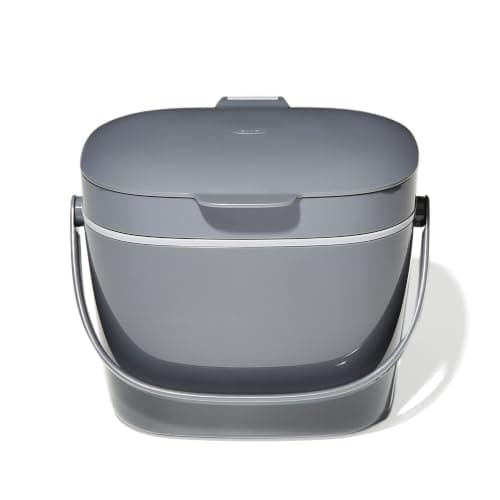
Best overall compost bin
OXO Good Grips Easy-Clean Compost Bin, 1.75 Gallon
The countertop compost bin that is actually easy to clean, because the inner bucket comes out and goes in the dishwasher.
$37.99 · 18% off · Price as of October 16, 2026. #ad How we make money

Best fitted liner
simplehuman Code Q Custom Fit Liners, Odorsorb
The liner that actually fits a 50-65 liter simplehuman can, with carbon worked into the film instead of a fragrance.
Price as of October 16, 2026. #ad How we make money

Best carbon refill
iTouchless AbsorbX Natural Activated Carbon Odor Filter Refills
The replacement carbon filter for iTouchless cans, and the one consumable that keeps a filtered can working.
$29.99 · 20% off · Price as of October 16, 2026. #ad How we make money
Does a bigger can help?
Almost always no, and this is the most common mistake in the category. A bigger can does not reduce how much waste you generate; it increases how long the oldest piece of it has been sitting there. If you are emptying a 13-gallon can every day because it is genuinely full, a 16-gallon can is a reasonable upgrade. If you are emptying it every three days because that is when it fills, going bigger makes the smell worse.
The exception is a household that is sorting properly. If the recycling stream is bulky and dry, that side can be as large as you like - cardboard does not rot. A dual-compartment can exploits this directly: a big dry side and a smaller wet side, emptied on different schedules. Dual-compartment cans and what size can for a family of four.
Common questions
How often should you take out the trash?
Every other day for a kitchen can, and daily in summer or whenever anything wet, meaty or animal has gone in. Bathroom cans can go weekly; paper and office bins can go fortnightly.
How often should you empty a kitchen trash can?
Every two days as a habit, daily in warm weather. Change the liner on schedule rather than when the bag is full - the residue is in the bag, and the bag costs pennies.
Is it bad to leave trash out overnight?
Indoors it is fine if the waste is dry and the lid seats. Outdoors in an area with raccoons or bears, putting the cart out the night before is the single biggest invitation there is - put it out on collection morning instead.
How long can trash sit before it smells?
Hours rather than days if anything wet is in it and the room is warm, because bacterial activity roughly doubles for every ten degrees. Dry waste can sit for a week without producing any smell at all.
Will a bigger trash can mean fewer trips?
Fewer trips, yes - and a worse smell, because the oldest waste in it will have been there longer. Sizing up only makes sense if you are genuinely filling the current can daily.
What is the best way to reduce how often you take out the trash?
Take the food waste out of the stream. A sealed countertop compost bin removes the wettest, most active material, and it reduces the urgency of emptying the main can more than any can feature does.
Sources
Every specification on this page traces to one of these, checked at the time of writing. Where a manufacturer does not publish a figure, the page says so rather than estimating it.
Read next
- Odor ControlThe free fixes first, then filters, deodorizers and cans built to contain smell.
- How to stop trash can smellSeven steps in order, free ones first, plus the three places residue hides.
- Trash can carbon filtersHow adsorption works, per-brand intervals, and why there is no indicator.
- Trash can still smells after cleaningSix reasons a scrubbed can still smells - and why four of them are not in the can at all.
- What size trash can for a family of 4?Thirteen gallons inside, 64 at the curb - and how to check that against your own household in one week.
- The best countertop compost binsFive caddies compared on cleanability, filters and how sour they go.
The author
Ryder M.
Owner and editor of Lid & Liner, published by Magoo Media Group. He started the site after getting tired of the same problem everyone has: every “best trash can” article covers ten products and none of them tells you whether a 13-gallon bag actually fits a 13-gallon can. Lid & Liner covers one category and tries to cover it completely.
Last reviewed October 6, 2026. Spotted an error? Tell us and we will correct it and note the correction.