Trash can still smells after cleaning
If you have washed it and the smell came back the same day, you did not miss a spot - you cleaned the wrong thing. Six causes, in the order they are worth checking.
By Ryder M. · Last reviewed October 6, 2026
Lid & Liner is reader-supported. If you buy through a link on this page we may earn a commission at no extra cost to you. It never changes which product we rank first — how we pick and how we make money.
The short answer
The three most common causes are residue you cannot reach, a smell that is not coming from the can at all, and a can that never dried. In that order. A scrubbed can that smells within hours almost always has organic residue in the rim channel, the pedal housing or the lid seam - the places a cloth does not go - or the odor is actually the floor under the can, the cabinet it stands in, or the drain two feet away.
The reason this is frustrating is that the surfaces you can see are the ones you cleaned, and they are not the problem. Work through the list below rather than scrubbing the same walls again.
The six causes, in order
1. Residue in the places you cannot see
The channel under the lid rim, the hinge recess, the pedal housing, and the gap between the body and its base trim. All four collect liquid, none of them gets wiped, and all four are warm. This is the single most common answer, and the fix is a stiff detail brush and a few minutes, not more cleaner. If the can has a removable inner bucket, the outside of that bucket and the inside of the body are two more surfaces people never clean.
2. It is not the can
Check in this order: the floor under the can, where drips land and dry; the cabinet floor if the can lives in one; the sink drain and the garbage disposal, which produce a strikingly similar smell; and the dishwasher filter. A surprising proportion of persistent trash smells are drain smells, and you can test it in a minute by moving the can to another room for a day.
3. The can never dried
Bacteria need moisture. A can rinsed and stood upright with water in the base, then immediately re-lined, is a can you have given a fresh start to the same organisms. Drying upside down in the sun for an hour is a bigger intervention than switching cleaners.
4. You disinfected without degreasing
A disinfectant kills what it contacts. On a greasy surface it contacts the top of the film and nothing underneath, so the residue - which is what actually smells - stays. Degrease first, always. What to clean a can with.
5. The smell has permeated a soft part
Most cans are non-porous, but not every part of them is. A foam or rubber lid gasket, a fabric liner sleeve, a cardboard-backed filter housing or a worn, scratched plastic interior will hold odor no matter how you clean it. Scratched plastic is the one people miss: a can scoured with an abrasive pad has a surface full of channels that hold residue.
6. Something is still in there
A tiny amount of the wrong material produces a disproportionate smell for days. A splinter of fish bone under the base trim, a leaked yoghurt pot in the hinge, a blown bag's contents in the pedal channel. Tip the can upside down in good light and look rather than reaching in.
What to do about each
| Cause | Fix | Time |
|---|---|---|
| Residue in seams and channels | Detail brush plus degreaser | 10 minutes |
| Not the can | Move the can for a day and re-smell the room | A day, no effort |
| Never dried | Upside down, lid open, in sun | 1-2 hours |
| Disinfected but not degreased | Degrease, then disinfect, in that order | 20 minutes |
| Soft part has absorbed it | Replace the gasket, sleeve or filter housing | Varies |
| Scratched plastic interior | Enzyme cleaner, repeated; or replace the can | Days, or a purchase |
| Something still in there | Tip it over and look | 2 minutes |
For the scratched-plastic and absorbed-odor cases, an enzyme or bacterial cleaner is the one product class that helps: it digests the organic residue rather than masking or oxidising it, which is exactly what you need when the residue is down in a surface you cannot scrub flat.
What we would reach for after the scrubbing has not worked: an enzyme cleaner for residue you cannot reach, and a lid filter or pod for the smell that is left.
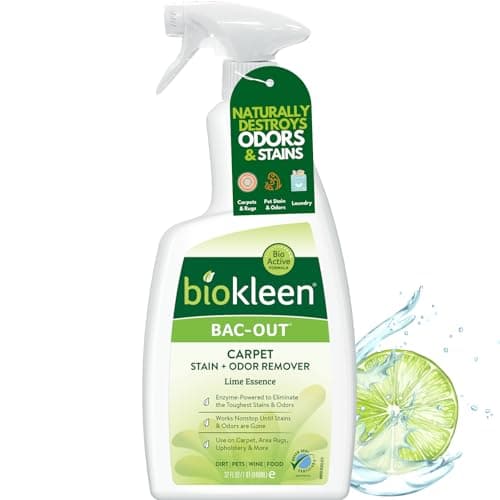
Best enzyme cleaner
Biokleen Bac-Out Stain and Odor Remover
The enzyme option for residue that has soaked in — a bin that still smells after a proper wash, rather than one that is merely dirty.
$12.73 · 24% off · Price as of October 16, 2026. #ad How we make money
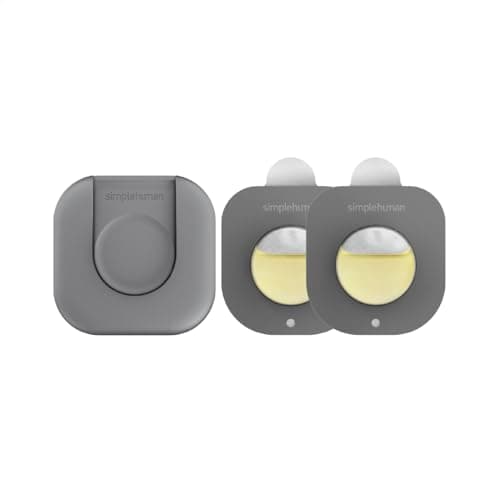
Best in-lid pod
simplehuman Odorsorb Pod
A plant-oil pod that clips under the lid and works for around 45 days — the right place to put odor control.
$25.00 · 40% off · Price as of October 16, 2026. #ad How we make money

Best carbon refill
iTouchless AbsorbX Natural Activated Carbon Odor Filter Refills
The replacement carbon filter for iTouchless cans, and the one consumable that keeps a filtered can working.
$29.99 · 20% off · Price as of October 16, 2026. #ad How we make money
Why the smell comes back so fast
Odor from a trash can is bacterial metabolism, not the waste itself. Bacteria double on a timescale measured in tens of minutes in warm conditions, and activity roughly doubles for every ten degrees of warmth. That is why a can can be sweet at 8am and unpleasant by dinner on a hot day, and it is why cleaning is a reset rather than a cure.
The implications are worth stating because they change what you buy. Emptying more often beats cleaning more thoroughly. Keeping wet waste out of the can beats any cleaner. A lid that seats fully holds the smell in. A carbon filter adsorbs what escapes, which is useful on a can you cannot empty daily and pointless on one you can. Carbon filters, honestly and how to stop trash can smell.
And if the can is in a garage or an unventilated utility room, the room is part of the problem - the smell has nowhere to go and the temperature is often higher than the house. Garage trash can smell covers that case specifically.
When to replace rather than keep cleaning
Replace it if the interior plastic is visibly scratched or hazed from abrasive cleaning, if there is a crack anywhere in the body or base, if a foam gasket has gone sticky, or if the can has a sealed mechanism - a sensor lid module - that something has got inside. In all four cases there is a surface you cannot reach, and you will keep having this afternoon.
If you are replacing it, the features that actually help are a fully seating damped lid, a liner system that stops bags leaking down the inside, a removable inner bucket you can carry to the sink, and a filter housing in the lid. Cans built around odor control.
Common questions
Why does my trash can still smell after cleaning?
Usually residue in the places a cloth does not reach - the rim channel, the hinge recess, the pedal housing - or because the smell is not coming from the can at all. The third most common cause is a can that was re-lined before it dried.
How do I get rid of a smell in a trash can that will not go away?
Degrease the seams and channels with a detail brush, dry the can upside down in the sun for an hour, then use an enzyme cleaner if the interior plastic is scratched. Enzymes digest residue that scrubbing cannot reach.
Could the smell be coming from somewhere other than the trash can?
Often, yes. The floor under the can, the cabinet it stands in, the sink drain, the garbage disposal and the dishwasher filter all produce a very similar smell. Move the can to another room for a day and see whether the smell moves with it.
Does baking soda fix a smelly trash can?
It helps a little on a clean dry can and does nothing on a dirty one. It is an absorbent, not a cleaner, so it is a maintenance step after the residue is gone rather than a fix.
Why does my trash can smell within hours of being cleaned?
Bacterial activity restarts on whatever residue is left and doubles on a timescale of tens of minutes in warm conditions. A same-day return of the smell means residue remains - almost always in a seam, a channel or under the base trim.
When should I just buy a new trash can?
When the interior plastic is scratched or hazed, when there is a crack in the body or base, when a foam gasket has gone sticky, or when something has got inside a sealed sensor lid. In each case there is a surface you cannot clean.
Sources
Every specification on this page traces to one of these, checked at the time of writing. Where a manufacturer does not publish a figure, the page says so rather than estimating it.
Read next
- Odor ControlThe free fixes first, then filters, deodorizers and cans built to contain smell.
- How to stop trash can smellSeven steps in order, free ones first, plus the three places residue hides.
- How to clean a trash canThe full method, including the underside of the rim everyone misses.
- How to get rid of mold in a trash canRemove it physically, dry the can, fix the moisture - why bleach is not step one, and where mold hides.
- Trash can carbon filtersHow adsorption works, per-brand intervals, and why there is no indicator.
- How to keep a trash can from smelling in the garageWhy a garage is the worst place for a can, and seven fixes specific to it.
The author
Ryder M.
Owner and editor of Lid & Liner, published by Magoo Media Group. He started the site after getting tired of the same problem everyone has: every “best trash can” article covers ten products and none of them tells you whether a 13-gallon bag actually fits a 13-gallon can. Lid & Liner covers one category and tries to cover it completely.
Last reviewed October 6, 2026. Spotted an error? Tell us and we will correct it and note the correction.