How to keep a trash can from sliding on the floor
A can that skates across tile every time you press the pedal is not badly made - it is unanchored and probably half empty. Five fixes, ranked by how long they last.
By Ryder M. · Last reviewed October 6, 2026
Lid & Liner is reader-supported. If you buy through a link on this page we may earn a commission at no extra cost to you. It never changes which product we rank first — how we pick and how we make money.
The short answer
Put the can in a corner or against a cabinet so it has something to push back against, and if it still moves, fit non-slip pads to the base. A step can slides because pressing the pedal applies a horizontal force as well as a vertical one, and an empty can does not weigh enough to resist it. Both of those fixes cost almost nothing and between them they solve the problem in most kitchens.
The reason this feels like a defect is that it gets worse as the can gets emptier - you notice it most right after you have changed the bag, which is also when you are least inclined to be charitable about it.
Why it happens
Three things combine, and all three are worth understanding because each one points at a different fix.
- The pedal pushes sideways. The pedal is a lever pivoting at the base, so your foot's force resolves into a downward component and a forward one. The forward component is what moves the can.
- Hard floors have almost no grip against moulded plastic feet. Porcelain tile, vinyl plank and sealed laminate are all slicker than the feet were designed to assume, and a wet floor near a sink is slicker still.
- An empty can is light. A stainless 13-gallon can weighs a few pounds empty. Friction scales with weight, so an empty can has a fraction of the grip a full one does - which is exactly why it slides after a bag change and not before.
The five fixes, ranked
Step 01
Move it against something solid
Free, immediate and the most effective single change. Put the long side of the can against a cabinet end, a wall or into a corner, with the pedal facing out into the room. The can now has something to transfer the horizontal force into. Leave two inches of clearance on the hinge side so the lid can still open.
Step 02
Fit non-slip pads to the base
Self-adhesive rubber or silicone furniture pads on the existing feet multiply the available grip. Clean and dry the base first, because the adhesive will not hold on a greasy underside. This is the fix that works when the can has to stand free, and it survives being moved for mopping.
Step 03
Put a mat under it
A rubber-backed mat or a cut-down anti-fatigue mat spreads the load and grips the floor. The side benefit is that it catches drips at bag-change time, which is the other mess this spot generates. The side cost is that the mat itself needs cleaning, so pick one you can hose off.
Step 04
Adjust the feet, if the can has adjustable ones
Some cans - the Brabantia Bo among them - ship with adjustable non-slip feet. Levelling them on an uneven floor puts weight on all four rather than two, which stops the rocking that precedes sliding. Check the base before you buy pads; the fix may already be there.
Step 05
Weight the base
The last resort, and the one to use on a can that otherwise works. A brick, a bag of sand or a dive weight sitting in the base cavity outside the liner adds the mass the can lacks. Make sure it cannot foul the pedal linkage, and remember it is there before you lift the can to carry it out.
What not to do
Do not screw or bolt it to the floor
It works, and it makes mopping, bag changes and the eventual cleaning of the floor underneath genuinely unpleasant. It also puts fixings into a floor you may not own. There is almost always a less permanent answer.
Do not glue the can down
Construction adhesive on the base of a can is a repair you cannot undo, on a product with a service life of a few years, over a floor finish you probably care about more than the can.
Do not press harder
The instinct when a can slides is to plant your foot more firmly, which increases the forward force along with the downward one. A light, square press on the middle of the pedal moves the can less than a hard press on the edge of it.
When the right answer is a different can
Two can characteristics make sliding much less likely, and if you are replacing the can anyway they are worth looking for. The first is a wide, long footprint - a rectangular can bears on a bigger area than a semi-round one of the same capacity, and the longer side resists the pedal's push. The second is a heavier body: stainless cans are heavier than plastic ones of the same size, and the extra few pounds is grip.
The third option removes the cause entirely. A touch-lid can like the Brabantia Bo has no pedal, so there is no horizontal force to resist, and the same is true of a motion-sensor can. If the can slides on a floor you cannot change and in a spot you cannot move it from, that is the structural fix. Step can versus touchless.
Three cans that are harder to shift: two rectangular stainless bodies with long footprints, and one with no pedal at all.
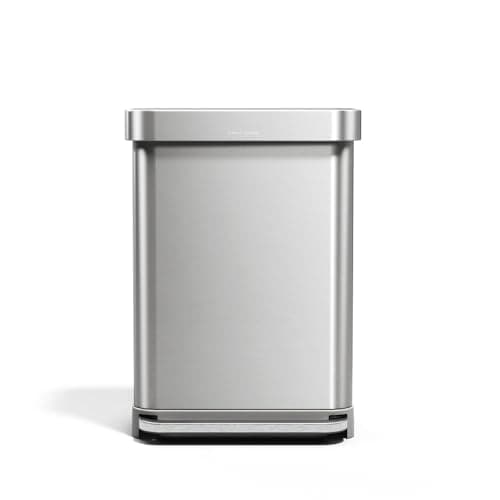
Best for big households
simplehuman 55L Rectangular Step Can
The 45L's bigger sibling: identical mechanism and liner pocket, sized for a household that fills a kitchen can every day rather than every three.
Price as of October 16, 2026. #ad How we make money
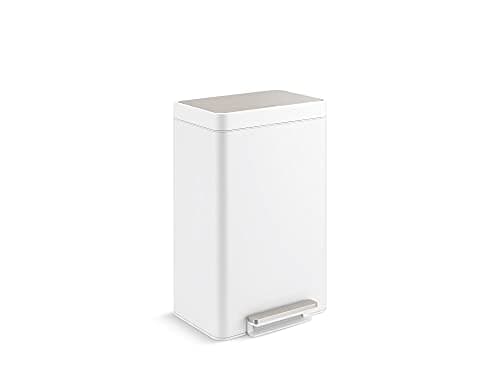
Best value stainless
Kohler 13-Gallon Stainless Steel Step Trash Can (K-20940)
The premium-feeling stainless can that does not lock you into proprietary liners — it is built around the standard 13-gallon bag.
Price as of October 16, 2026. #ad How we make money
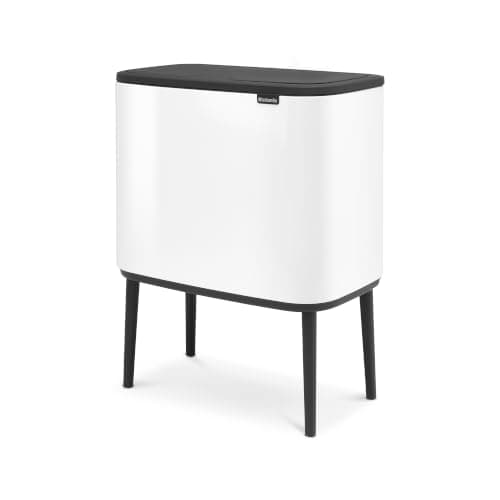
Best warranty
Brabantia Bo Touch Bin, 36 L
A touch-open bin with a ten-year guarantee and a removable inner bucket, built to sit flat against a wall.
Price as of October 16, 2026. #ad How we make money
And if the can you want is going inside a cabinet, the question disappears - a pull-out unit is bolted to the cabinet floor by design. Under-sink and pull-out cans.
Common questions
How do I stop my trash can from sliding on the floor?
Stand it against a cabinet end or in a corner with the pedal facing out, and fit self-adhesive non-slip pads to the base if it still moves. Those two steps fix it in most kitchens and cost almost nothing.
Why does my trash can slide when I step on the pedal?
The pedal is a lever, so your foot applies a forward force as well as a downward one. An empty can does not weigh enough for the feet to grip against that, which is why it slides worst right after a bag change.
What can I put under a trash can to stop it moving?
A rubber-backed mat, or self-adhesive silicone furniture pads on the existing feet. The mat has the advantage of catching drips at bag-change time; the pads have the advantage of surviving being moved for mopping.
Should you screw a trash can to the floor?
We would not. It works, but it makes cleaning under and around the can unpleasant, it puts fixings into a floor you may not own, and it is permanent for a product that lasts a few years.
Do heavier trash cans slide less?
Yes. Friction scales with weight, so a stainless body slides less than a plastic one of the same size, and a rectangular footprint resists the pedal's push better than a semi-round one.
Which trash cans do not slide?
Cans with no pedal - touch-lid and motion-sensor models - because there is no horizontal force applied in the first place. Cabinet-mounted pull-out units also cannot move, since they are fixed to the cabinet.
Sources
Every specification on this page traces to one of these, checked at the time of writing. Where a manufacturer does not publish a figure, the page says so rather than estimating it.
Read next
- Kitchen Trash CansStep cans, stainless, dual recycling and compost — plus the sizing nobody explains.
- Where to put a trash can in a small kitchenEight placements that work, ranked, and the two that always go wrong.
- Trash can pedal not working: how to fix itFive causes of a dead step pedal, in the order to check them - and the one that means the can is finished.
- The best step trash cansSix pedal cans ranked on published cycle ratings and lid damping.
- Touchless vs step trash cansPedal or sensor, compared on failure mode, running cost, speed and noise - with the verdict by kitchen.
- The best under-sink pull-out trash cansSix pull-outs compared on slides, frames and the openings they actually need.
The author
Ryder M.
Owner and editor of Lid & Liner, published by Magoo Media Group. He started the site after getting tired of the same problem everyone has: every “best trash can” article covers ten products and none of them tells you whether a 13-gallon bag actually fits a 13-gallon can. Lid & Liner covers one category and tries to cover it completely.
Last reviewed October 6, 2026. Spotted an error? Tell us and we will correct it and note the correction.