Touchless vs step trash cans
Both open without your hands. One has a linkage that wears out and one has electronics and batteries, and that single difference decides almost everything else.
By Ryder M. · Last reviewed October 4, 2026
Lid & Liner is reader-supported. If you buy through a link on this page we may earn a commission at no extra cost to you. It never changes which product we rank first — how we pick and how we make money.
The verdict, first
Buy a step can unless you have a specific reason not to. It is cheaper, it has no consumables, it opens instantly, and the thing that eventually fails on it is a mechanical linkage rather than a circuit board. Buy a touchless can if you cook with raw meat daily, if bending or using a foot is difficult, if the can has to sit where a pedal cannot be reached, or if you simply want it — which is a legitimate reason as long as you know what you are accepting.
| # | Product | Best for | Price |
|---|---|---|---|
| 01 | 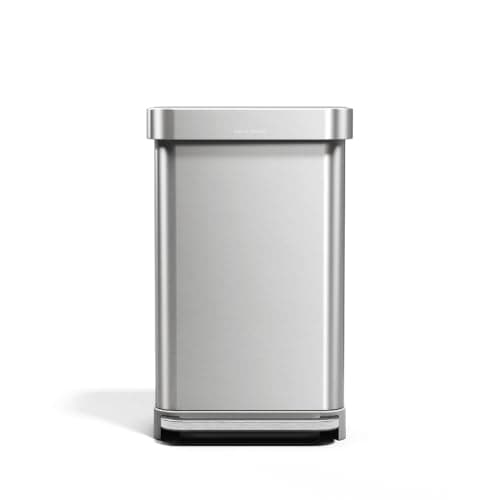 simplehuman 45L Rectangular Step Can with Liner PocketThe kitchen can that solves bag fit properly, with a pedal rated for 150,000 steps and a liner pocket that ends the hunt for the box under the sink. | Best overall | $149.99 · View on Amazon Price as of October 16, 2026. #ad How we make money |
| 02 | 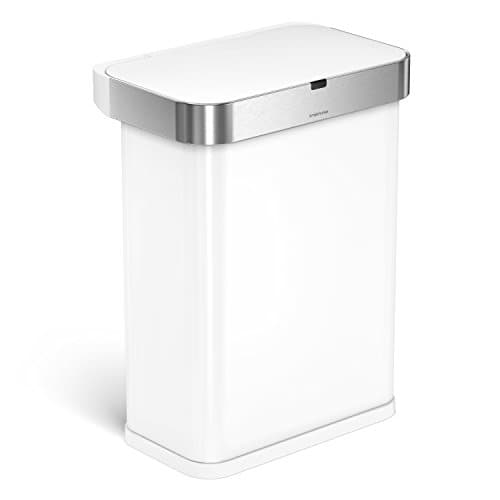 simplehuman 58L Sensor CanThe touchless can that gets the sensor right — it reads how long you are standing there rather than running a fixed timer. | Best touchless overall | |
| 03 | 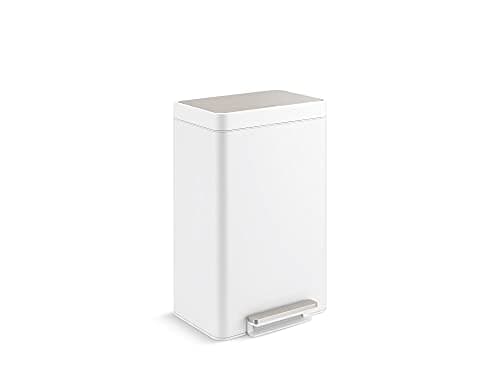 Kohler 13-Gallon Stainless Steel Step Trash Can (K-20940)The premium-feeling stainless can that does not lock you into proprietary liners — it is built around the standard 13-gallon bag. | Best value stainless | $160.99 · View on Amazon Price as of October 16, 2026. #ad How we make money |
| 04 | 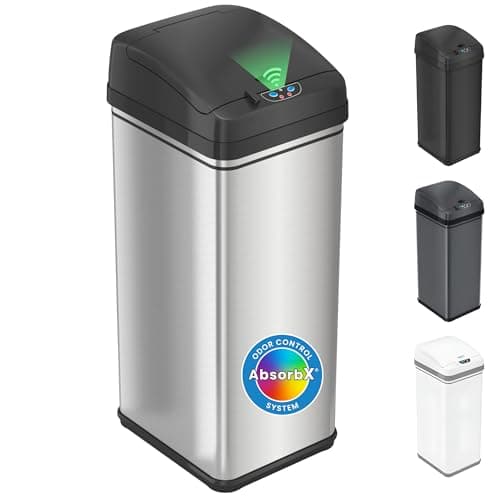 iTouchless 13 Gallon SensorCan with AbsorbX Odor FilterThe touchless can that ships with a carbon filter in the lid and takes ordinary 13-gallon bags, at a fraction of the premium price. | Best touchless value | $79.99 · View on Amazon $89.99 · 11% off · Price as of October 16, 2026. #ad How we make money |
The four cans above are two of each, chosen as representative rather than as the only options. The premium pair and the value pair are deliberately side by side, because the gap between a good sensor and a bad one is larger than the gap between a sensor and a pedal.
The two mechanisms side by side
| Step can | Touchless can | |
|---|---|---|
| Opens without hands | Yes | Yes |
| Opens instantly | Yes | Half a second of lag |
| Consumables | None | C or D cells, 9-18 months |
| What eventually fails | Pedal linkage at the pin | Sensor, motor or board |
| Can you still use it when it fails | Lift the lid by hand | Usually yes, if the lid lifts |
| Noise | Pedal clack unless damped | Motor hum, quieter |
| False opening | Never | In a traffic path, often |
| Price for the same capacity | Lower | Higher |
| Hands never near the can | Foot touches the pedal | Nothing touches it |
What actually fails, on each
A step can fails at the pedal linkage, nearly always at the pin, and nearly always because liquid has run down the pedal channel and corroded it. Good cans use a steel pedal on a steel linkage and publish a cycle rating — simplehuman states 150,000 steps, EKO states over 200,000. Those are manufacturer figures rather than independent tests, but a brand willing to print one expects the part to last.
A touchless can has more ways to fail and most of them are not failures at all. The overwhelmingly common cause of a sensor can misbehaving is flat batteries, and the second is a dirty or sun-struck sensor window. Both are five-minute fixes, which is why we wrote a fix-it guide rather than a replacement guide. Genuine board or motor failure happens, but it is well down the list.
The honest asymmetry is this: a dead step can is a can with a stiff pedal that you can still open by hand for years. A dead sensor can is usually also usable by hand, but it is a lid you now lift manually on a can you paid a premium for specifically so you would not have to.
The running cost nobody mentions
Sensor cans run on large alkaline cells — C or D, not AA — because the lid motor draws a real current for a moment. Ninestars publishes roughly 10,000 open-close cycles from three C cells, which is over a year at twenty opens a day, and nine to eighteen months is the realistic range for a well-placed can. Call it one set of cells a year plus a carbon filter if the can takes one.
That is not a large number, but it is not zero, and it is a recurring errand rather than a cost. A step can has no equivalent. If you want the touchless behavior without the battery cycle, several models take an AC adapter — worth it if there is an outlet near where the can lives. Batteries, cycle figures and when mains power pays off.
Where each one is clearly right
| If this is you | Buy | Why |
|---|---|---|
| You want one good can and no fuss | Step can | No consumables, instant, cheaper for the same build |
| You handle raw meat or dough daily | Touchless | Nothing on the can gets touched at all |
| Bending or using a foot is difficult | Touchless | No pedal force required |
| The can lives in a busy walkway | Step can | A sensor in a traffic path opens at everything |
| The can sits under a counter overhang | Step can | A sensor lid needs clearance and a clear sight line |
| Small children treat the can as a toy | Step can | Nothing to false-trigger and nothing to drain |
One more consideration that decides it for some kitchens: a sensor can needs somewhere its eye is not constantly being walked past, and it needs headroom for the lid to rise. If your can lives in the gap beside the fridge under a wall cabinet, the pedal is not just cheaper, it is the only one that works. Where to put a can in a small kitchen.
If you are going touchless, buy the sensor not the can
The difference between a sensor can people love and one they put in the garage is almost entirely sensor behavior. A cheap can runs a fixed timer: the lid opens, waits a set number of seconds and closes, often onto your hand. A good one is adaptive — it holds the lid open while it can still see you standing there, and only then closes. That one behavior is most of what the premium buys.
If the budget is tight, the better move is a good step can rather than a cheap sensor can. We rank both categories separately: the best touchless cans and the best step cans. And if you want the full argument about whether the premium is justified at all, we made it here.
Common questions
Is a touchless or a step trash can better?
A step can is the better default: cheaper, instant, no batteries, and the failure mode is a mechanical linkage you can still work by hand. A touchless can is better if you handle raw food constantly, if bending or using a foot is hard, or if the can cannot sit where a pedal is reachable.
Do touchless trash cans break more often than step cans?
They have more ways to misbehave, but most of those are flat batteries or a dirty sensor window rather than genuine failures. Real board or motor failure is well down the list of causes.
How much do touchless trash cans cost to run?
About one set of large alkaline cells a year for a well-placed can, plus a carbon filter if the model takes one. Ninestars publishes roughly 10,000 open-close cycles from three C cells.
Are sensor trash cans slower than pedals?
Slightly. There is a fraction of a second between the sensor seeing you and the lid being open, where a pedal is immediate. Most people stop noticing within a week.
Can a touchless trash can be opened by hand if the battery dies?
On most models yes, the lid lifts manually. Check that before you buy, because the ones that do not are genuinely stuck shut when the cells go flat.
Which is quieter?
A touchless can, usually. A motorized lid hums; an undamped pedal lid closes with a crack. A step can with a proper soft-close damper is quieter than both.
Sources
Every specification on this page traces to one of these, checked at the time of writing. Where a manufacturer does not publish a figure, the page says so rather than estimating it.
Read next
- Touchless Trash CansSensor cans that do not close on your hand, plus battery life and the lid fix.
- Are touchless trash cans worth it?Who a sensor can is genuinely worth it for, what it costs to run, and which feature decides whether you keep it.
- The best touchless trash cans of 2026Seven sensor cans compared on sensor behavior, battery life and warranty.
- The best step trash cansSix pedal cans ranked on published cycle ratings and lid damping.
- How motion sensor trash cans workWhat the sensor actually detects, and why that explains every misfire.
- Touchless trash can batteries and powerWhat each brand takes, how long it lasts, and when mains power pays off.
The author
Ryder M.
Owner and editor of Lid & Liner, published by Magoo Media Group. He started the site after getting tired of the same problem everyone has: every “best trash can” article covers ten products and none of them tells you whether a 13-gallon bag actually fits a 13-gallon can. Lid & Liner covers one category and tries to cover it completely.
Last reviewed October 4, 2026. Spotted an error? Tell us and we will correct it and note the correction.