How to clean an outdoor garbage can
Wet it, degrease it, let it dwell, agitate it, rinse it, dry it upside down. Six steps, about twenty minutes, and the last one is the step everybody skips and the one that decides whether it smells next week.
By Ryder M. · Last reviewed October 6, 2026
Lid & Liner is reader-supported. If you buy through a link on this page we may earn a commission at no extra cost to you. It never changes which product we rank first — how we pick and how we make money.
The short answer
Rinse, apply a degreaser, let it dwell ten minutes, scrub with a long-handled brush, rinse, then stand it upside down to dry in the sun. Do it on grass or gravel rather than a driveway so the runoff soaks away instead of running to a storm drain, and do it on the day the cart is emptied, when it is empty and you have a week before it matters again.
The reason the drying step matters as much as the washing is that what you are smelling is bacterial activity in a film of organic residue. Water is part of what that film needs. A cart that is rinsed and left standing upright with an inch of water in the bottom is a cart that smells worse in three days than it did before you started.
The method
Step 01
Pick the day and the spot
Clean it the morning it is emptied, so the cart is as empty as it ever gets and has the longest possible time to dry before the next load. Move it onto grass, gravel or a planted area. Washing a cart on a driveway sends the runoff to a storm drain, which in most municipalities is both discouraged and pointless when a lawn will filter it for you.
Step 02
Rinse out the loose material
Hose the inside from the top, working around the walls, and tip the cart to pour the water out. You are removing what is loose so the cleaner can reach the film underneath. If there is baked-on residue, a few minutes of plain water sitting in the bottom softens it while you get the cleaner ready.
Step 03
Apply a cleaner at the right strength
A degreaser concentrate is the right tool - the residue in a garbage can is mostly fat and protein, which is what degreasers are formulated for. Zep publishes three dilutions for three levels of soil; Simple Green publishes a garbage can method of its own. For a cart that has had meat or fish in it, use a disinfectant concentrate instead: OdoBan's EPA label names garbage cans specifically. Coat the walls, the base and the underside of the lid.
Step 04
Let it dwell
Ten minutes, longer if it is a disinfectant, and keep the surface wet the whole time. This is the step that does the actual work and the step people skip. Scrubbing a dry surface moves residue around; scrubbing after a dwell lifts it off.
Step 05
Agitate, with a tool that reaches
A long-handled brush with a pivoting head reaches the bottom of a 64- or 96-gallon cart without you climbing in or lying across the rim. Work the base, the corners where the walls meet the floor, and the rim channel under the lid - that channel is where the smell lives, and a hose never touches it.
Step 06
Rinse, then dry it upside down
Rinse from the top until the water runs clear, then tip the cart over - inverted, propped against a fence or a wall with the lid open so air moves through. An hour in direct sun does more for the smell than anything in the previous five steps. Do not put a bag back in until the inside is dry to the touch.
What to use
Three products cover every version of this job, and the right one depends on what went into the cart.
| Situation | Use | Why |
|---|---|---|
| General grime, no meat | All-purpose degreaser concentrate | The residue is fat; degreasers lift fat |
| Meat, fish or pet waste | Disinfectant concentrate | Bacterial load, not just soil |
| Maggots present | Boiling water first, then degrease | Heat kills them; cleaning removes the food source |
| Smell with no visible residue | Enzyme or bacterial cleaner | Digests what you cannot see |
| Mold on the lid or rim | Detergent and scrubbing | Physical removal is what works |
| Frozen residue in winter | Wait for a thaw | Nothing works below freezing |
The three things we would have in the garage for this job: a degreaser concentrate with published dilutions, a disinfectant whose label covers garbage cans, and a brush that reaches the bottom of a 96-gallon cart.
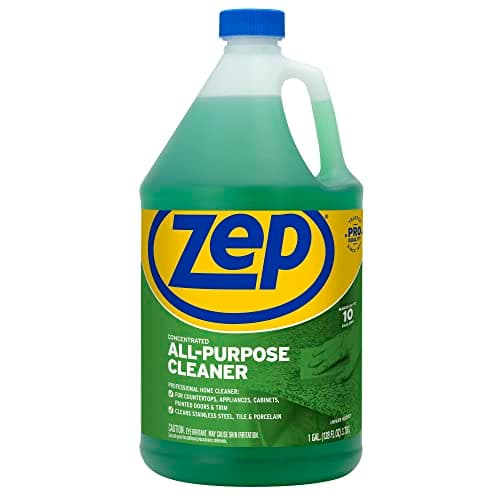
Best concentrate value
Zep All-Purpose Cleaner and Degreaser Concentrate (ZU0567128)
The bulk option: a gallon of concentrate that Zep states makes up to ten gallons of working solution, with a published dilution for each level of soil.
Price as of October 16, 2026. #ad How we make money
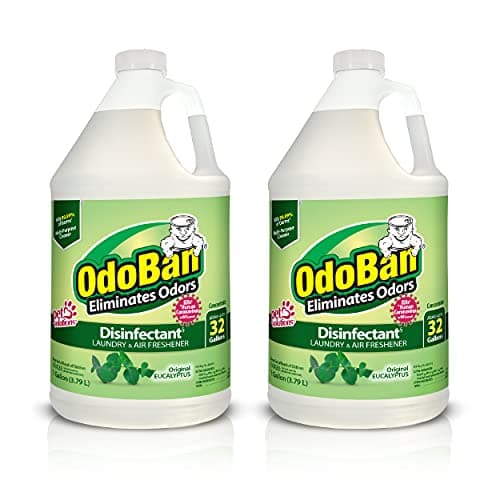
Best disinfectant
OdoBan Disinfectant and Odor Eliminator Concentrate
The registered disinfectant step, and one of the few whose EPA label carries directions for garbage cans and waste receptacles specifically.
Price as of October 16, 2026. #ad How we make money
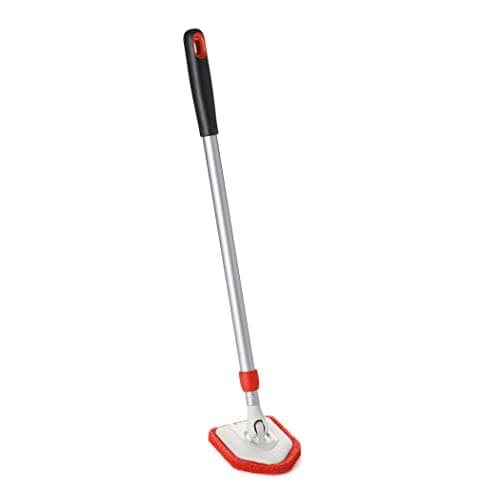
Best for reach
OXO Good Grips Extendable Tub and Tile Scrubber
The tool that makes cleaning a big can possible at all: a steel handle that twists out to 42 inches with a head that pivots into the bottom corners.
Price as of October 16, 2026. #ad How we make money
How often, realistically
Twice a year is enough for a cart that only ever sees bagged waste in a temperate climate. Four times a year is right for most households. Monthly in summer is right if you have pets, small children in diapers, or a long hot season - bacterial activity roughly doubles for every ten degrees of warmth, so a July cart is a different problem from a February one.
The honest version is that the cleaning schedule matters far less than whether the waste goes in bagged. A cart that only ever receives tied bags barely needs cleaning; a cart that receives loose kitchen waste needs it monthly and will still smell. That is the whole trick, and it costs nothing. Why bag fit matters more than people think.
- Double-bag anything wet or sharp. One split bag in the bottom of a cart undoes a cleaning.
- Freeze meat scraps until collection day. Fish bones and chicken carcasses in a 90-degree cart for six days are the single worst thing you can do to it.
- Keep the lid closed and the cart in shade if you can. Heat and moisture are the two inputs.
- Sprinkle an absorbent deodoriser in the base after cleaning. It will not fix a dirty cart, but it buys time on a clean one. Deodorisers that work.
If the cart is not yours
In a lot of municipalities the wheeled cart belongs to the hauler rather than to you, which is worth knowing for two reasons. A cracked body or a missing lid is usually replaced free on request, and a cart so far gone that cleaning will not fix it can often simply be swapped. Call before you spend a Saturday on it.
There are also cart-cleaning services in most metro areas that come to the curb with a pressure washer and a reclaim tank. They are a reasonable purchase once a year if the cart is large, your back is not, or you have nowhere to do this that is not a driveway.
If the cart smells because animals keep opening it rather than because it is dirty, cleaning is the wrong fix. Raccoon-proofing and lid locks address that directly, and garage can smell covers the version of this problem that happens indoors.
Common questions
How do you clean an outdoor garbage can?
Rinse it out, apply a degreaser concentrate, let it dwell ten minutes, scrub with a long-handled brush, rinse until clear, then stand it upside down in the sun to dry. Do it on grass rather than a driveway and on the day it is emptied.
What is the best thing to clean a garbage can with?
An all-purpose degreaser concentrate for ordinary grime, because the residue is mostly fat. Switch to a disinfectant concentrate whose label covers garbage cans if meat, fish or pet waste has been in there.
Can you use bleach to clean a garbage can?
You can, but not as the first step - bleach does not degrease, so on a greasy can it only reaches the surface of the film. Degrease first, disinfect second, and never mix bleach with an ammonia-based cleaner.
How often should you clean an outdoor garbage can?
Twice a year if only bagged waste goes in, four times a year for most households, and monthly in summer if you have pets or diapers. Bacterial activity roughly doubles for every ten degrees of warmth.
How do you clean a garbage can without a hose?
Two buckets: one of hot degreaser solution to apply and scrub with, one of clean water to rinse. Tip the dirty water onto a planted area. A long-handled brush is what makes this workable in a 64-gallon cart.
How do you clean the bottom of a 96-gallon trash can?
With a long-handled brush with a pivoting head, from outside the cart. Do not climb in - a tipped cart with a person half inside it is how people get hurt doing this.
Sources
Every specification on this page traces to one of these, checked at the time of writing. Where a manufacturer does not publish a figure, the page says so rather than estimating it.
Read next
- Odor ControlThe free fixes first, then filters, deodorizers and cans built to contain smell.
- How to clean a trash canThe full method, including the underside of the rim everyone misses.
- The best trash can cleanersDegreaser, disinfectant or enzyme - six cleaners and tools, matched to what your can actually has wrong with it.
- How to get rid of mold in a trash canRemove it physically, dry the can, fix the moisture - why bleach is not step one, and where mold hides.
- How to keep a trash can from smelling in the garageWhy a garage is the worst place for a can, and seven fixes specific to it.
- How to get rid of maggots in a trash canBoiling water, safely — plus why they appeared overnight and how to stop it.
The author
Ryder M.
Owner and editor of Lid & Liner, published by Magoo Media Group. He started the site after getting tired of the same problem everyone has: every “best trash can” article covers ten products and none of them tells you whether a 13-gallon bag actually fits a 13-gallon can. Lid & Liner covers one category and tries to cover it completely.
Last reviewed October 6, 2026. Spotted an error? Tell us and we will correct it and note the correction.