Touchless trash can batteries and power
What each brand takes, the one published cycle figure anybody states, and why erratic behavior is a battery symptom long before it is a fault.
By Ryder M. · Last reviewed September 27, 2026
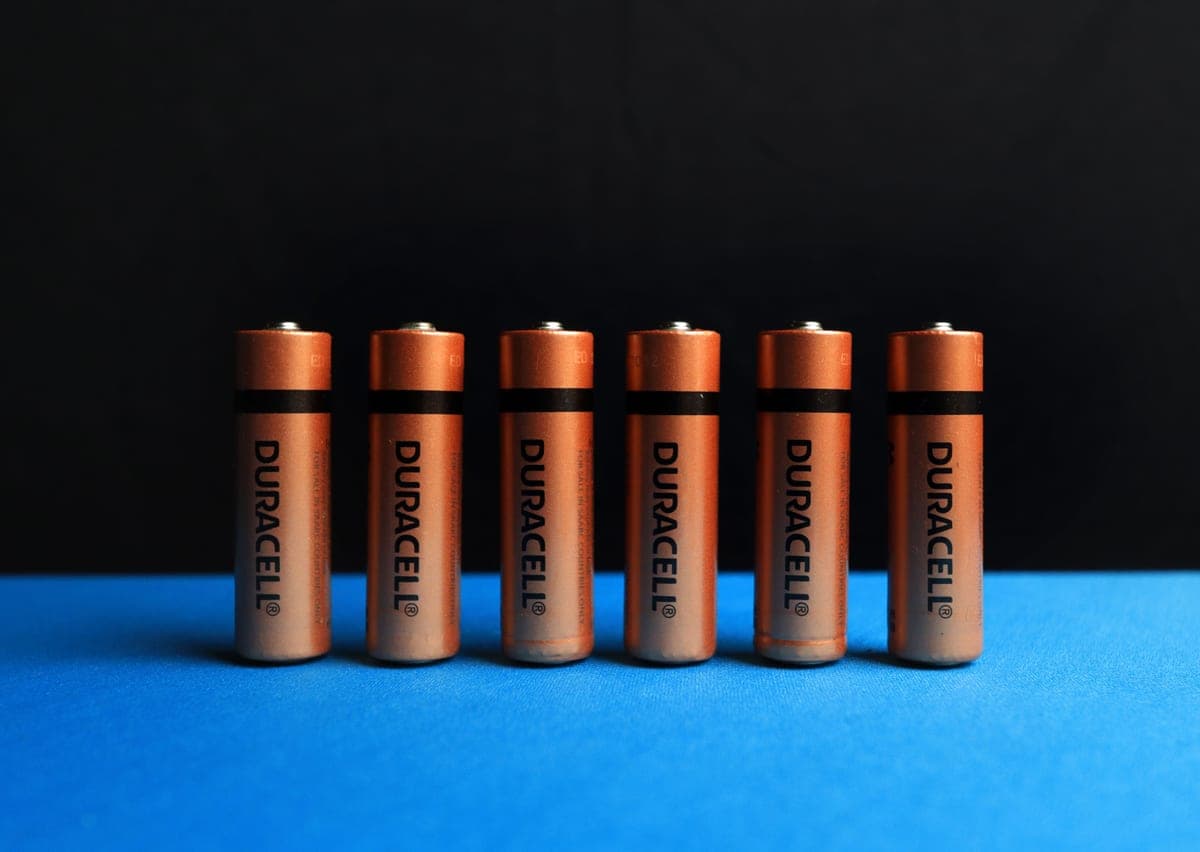
What each brand takes
Sensor cans run on large alkaline cells — C or D, not AA — because the lid motor draws a real current for a moment and small cells sag under it.
| Brand / model | Batteries | Published life | Mains option |
|---|---|---|---|
| iTouchless 13 gal SensorCan | 4 x D | Not published | Yes — AC adapter sold separately |
| Ninestars DZT-50-9 | 3 x C | ~10,000 open-close cycles | Not published |
| simplehuman sensor cans | Battery | Not published | Not published |
| Kohler K-23825 | Battery | Not published | Not published |
| EKO Mirage-T | Battery | Not published | Not published |
Two honest observations from that table. Ninestars' 10,000-cycle figure is the only comparable number any brand in this category publishes, which is why it carries weight in our touchless roundup out of proportion to its price. And iTouchless is the only brand here that publishes an AC option, which is a more useful feature than it sounds — see below.
How long they actually last
Work it out rather than guessing, because the answer varies by a factor of three depending on where the can sits.
- Count your opens per day. Two people is roughly fifteen to twenty; a family of four is nearer thirty.
- Divide the cycle figure. Ten thousand cycles at twenty a day is about 500 days — over a year.
- Subtract for false triggers. A can in a walkway can easily add a third again. This is the single biggest variable and it is free to fix.
- Subtract for cold. Alkaline cells lose capacity below about 10 degrees Celsius, so a can in an unheated garage or utility room will do noticeably worse.
- Subtract for the motor working harder. An overfilled can, or a bag jammed under the lid, makes the motor strain on every cycle.
The realistic range for a well-placed household can is nine months to eighteen. If you are replacing cells every couple of months, the can is almost certainly false-triggering — move it out of the traffic path and clean the sensor window before you blame the can. Why it false-triggers.
Rechargeables, lithium and the ones to avoid
| Type | Works? | Notes |
|---|---|---|
| Alkaline C / D | Yes — the default | What every manufacturer specifies and assumes |
| NiMH rechargeable | Usually, with a caveat | 1.2 V per cell against 1.5 V alkaline, so a three-cell can sees 3.6 V instead of 4.5 V. Some cans are fine; some become insensitive or refuse to run |
| Lithium primary (non-rechargeable) | Yes, and best in cold | Holds voltage far better at low temperatures — worth it for a garage can |
| Zinc-carbon / heavy duty | Technically yes | Sags badly under the motor load. False economy |
| AA cells in a C/D adapter sleeve | Avoid | Much lower capacity and higher internal resistance; the motor stutters |
The NiMH caveat is the one worth testing before you commit to a set. If the can becomes noticeably less sensitive on rechargeables, that is the voltage difference and not a fault — go back to alkaline. And do not mix old and new cells, or brands: the weakest cell sets the behavior of the whole pack.
When an AC adapter is worth it
If there is an outlet within reach of where the can lives, mains power is the upgrade nobody talks about.
It is not mainly about the cost of batteries. It is that a mains can never enters the erratic phase. With a battery can, the last stretch of every battery cycle is a period of weakened emission where the can misses opens and triggers at nothing — and that is the experience people remember and complain about. On mains, the emitter runs at full voltage forever and the can behaves identically on day one and day one thousand.
Two caveats. A trailing cable across a kitchen floor is a genuine hazard and a mopping nuisance, so this only makes sense where the outlet is close and the run can be tucked behind the can. And check whether the can still opens by hand on mains — in a power cut a can with no manual override becomes a sealed box.
Common questions
What batteries does a touchless trash can use?
Large alkaline cells. iTouchless 13-gallon cans take four D cells; Ninestars takes three C cells. AA cells are not used because the lid motor draws too much current for them.
How long do touchless trash can batteries last?
Ninestars publishes about 10,000 open-close cycles from three C cells — over a year at twenty opens a day. Nine to eighteen months is realistic for a well-placed can. Much less if it is false-triggering or sitting somewhere cold.
Can I use rechargeable batteries in a sensor trash can?
Often, but NiMH cells supply 1.2 V against alkaline's 1.5 V, so the can sees noticeably lower voltage. Some models cope; others become insensitive. Test a set before buying several.
Why does my touchless trash can open by itself?
Low batteries are one of the main causes — falling voltage confuses the detection threshold. The others are a reflective surface in front of the sensor, direct sunlight, or a walkway in the detection cone.
Is an AC adapter worth it for a sensor trash can?
If there is an outlet nearby, yes — not mainly for the battery saving but because the sensor never weakens, so the can never goes through the erratic phase at the end of a battery cycle.
Sources
Every specification on this page traces to one of these, checked at the time of writing. Where a manufacturer does not publish a figure, the page says so rather than estimating it.
Read next
- Touchless Trash CansSensor cans that do not close on your hand, plus battery life and the lid fix.
- Touchless trash can lid not openingSix checks in order of cost, and an honest point at which to stop repairing.
- How motion sensor trash cans workWhat the sensor actually detects, and why that explains every misfire.
- The best touchless trash cans of 2026Seven sensor cans compared on sensor behavior, battery life and warranty.
- iTouchless 13 Gallon SensorCan reviewStandard bags, a filter in the lid, an AC option — and a one-year warranty.
- Contact usTell us we are wrong and we will correct it.
The author
Ryder M.
Owner and editor of Lid & Liner, published by Magoo Media Group. He started the site after getting tired of the same problem everyone has: every “best trash can” article covers ten products and none of them tells you whether a 13-gallon bag actually fits a 13-gallon can. Lid & Liner covers one category and tries to cover it completely.
Last reviewed September 27, 2026. Spotted an error? Tell us and we will correct it and note the correction.