iTouchless vs Ninestars
These are the two brands you end up choosing between once you have decided not to spend simplehuman money. They are close on paper and differ in exactly two places that matter.
By Ryder M. · Last reviewed October 6, 2026

Lid & Liner is reader-supported. If you buy through a link on this page we may earn a commission at no extra cost to you. It never changes which product we rank first — how we pick and how we make money.
The verdict, first
Buy the iTouchless 13 Gallon SensorCan if the can is going in a kitchen where smell is the recurring complaint, because it ships with an activated-carbon filter in the lid rather than selling you one later. Buy the Ninestars DZT-50-9 if you would rather not think about batteries, because it is the one with a published cycle figure and a manual mode that holds the lid open.
| # | Product | Best for | Price |
|---|---|---|---|
| 01 | 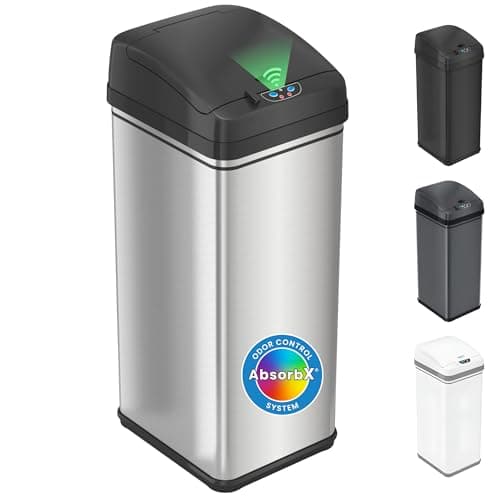 iTouchless 13 Gallon SensorCan with AbsorbX Odor FilterThe touchless can that ships with a carbon filter in the lid and takes ordinary 13-gallon bags, at a fraction of the premium price. | Best touchless value | $79.99 · View on Amazon $89.99 · 11% off · Price as of October 16, 2026. #ad How we make money |
| 02 | 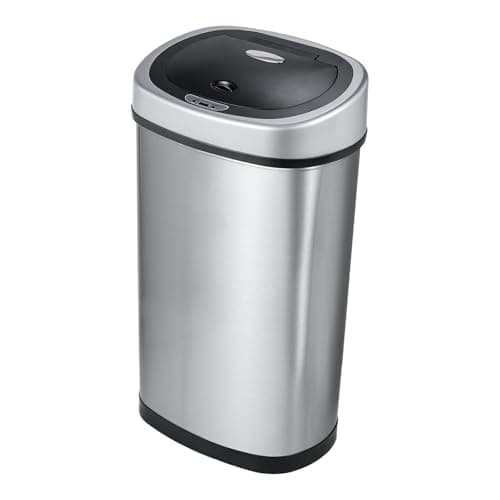 Ninestars DZT-50-9 13.2 Gallon Motion Sensor Trash CanThe sensor can with the best published battery figure in the category: about 10,000 cycles on three C cells. | Best battery life | $67.15 · View on Amazon Price as of October 16, 2026. #ad How we make money |
Both sit in the same price bracket, which is the bracket well below the premium brands and well above a plain step can. Neither is trying to be a simplehuman. What they are competing on is which annoyance they remove, and they have each picked a different one.
The specifications side by side
| iTouchless 13 Gallon SensorCan | Ninestars DZT-50-9 | |
|---|---|---|
| Capacity | 13 US gal / 50 L | 13.2 US gal / 50 L |
| Power | 4 x D cells, or an optional AC adapter | 3 x C cells |
| Published battery life | Not stated on the listings we checked | ~10,000 open-close cycles |
| Odor filter | AbsorbX carbon filter included | None included |
| Lid security | Lid lock | Manual mode holds the lid open |
| Sensor | Infrared | Infrared, fixed timer |
| Body | Brushed stainless with an ABS lid | Fingerprint-resistant commercial-grade stainless |
| Bag | Standard 13-gallon, 12 in opening | Standard, removable ring liner |
| Stated warranty | 1 year | Not stated on the listings we checked |
Read the table and most rows are a wash. The capacity difference is a fifth of a gallon, which is nothing. Both take ordinary 13-gallon bags, which is the single most important thing a sensor can at this price can get right. Why the bag is the deciding spec more often than the sensor.
The battery question is the real one
A sensor can lives or dies on how often it needs feeding. Ninestars states roughly 10,000 open-close cycles per set of three C cells, which at twenty opens a day is comfortably more than a year. iTouchless does not put an equivalent number on the listings we checked, and it uses four D cells instead of three C cells.
Treat the 10,000 figure as a statement of intent rather than a measurement. It is the manufacturer's own number, we have not verified it, and real-world life depends on how long the lid is held open and how cold the room is. But a brand that publishes a figure is a brand that expects the mechanism to reach it, and in a category where the standard complaint is dead batteries, the one willing to print a number has earned something.
The counter-argument is the AC adapter. iTouchless sells one as an optional accessory, and if your can will sit within reach of an outlet, mains power ends the battery conversation permanently. That is a genuinely better answer than any cycle rating, with the obvious caveat of a cable running across a kitchen floor. The full picture on powering a sensor can.
The filter question is the other one
iTouchless builds an AbsorbX activated-carbon filter into the lid as standard. That is the correct place for it, because the lid is where odor collects and sits, and carbon adsorbs odor molecules rather than covering them with a fragrance. Ninestars does not include one.
How much that matters depends entirely on what goes in the can. If it is mostly dry packaging, nothing. If it is kitchen scraps in a warm room, the filter is doing real work between emptyings. It is also a consumable, so it is a small recurring cost rather than a one-time feature. What carbon filters do, how long they last, and when they are a waste of money.
Where each one will annoy you
The Ninestars timer closes on you
The DZT-50-9 runs a fixed-duration timer rather than an adaptive sensor. Hold a plate over it, pause to scrape, and it will close while your hand is still there. This is the behavior people return sensor cans over, and it is the clearest thing you give up against a premium can with an adaptive sensor. The manual mode exists precisely to work around it, and it works, but you have to remember to press it.
The iTouchless warranty is short
One year, on a product with a motor and an infrared sensor in it. That is not unusual at this price but it is worth seeing clearly, because the failure mode of a sensor can is electronic rather than structural. A step can with a broken pedal is a mechanical repair; a sensor can with a dead board is scrap.
Both are heavier than they look
The Ninestars is listed at 12.57 lb empty. Stainless bodies and a motor assembly add up, and this matters if the can has to be lifted onto a counter to clean or moved to vacuum underneath. Neither of these is a can you reposition casually.
And if the lid stops opening
It is almost always the sensor window or the batteries rather than the mechanism, and it is usually fixable in two minutes. The diagnostic order that finds it fastest.
What they agree on, and why it is the real reason to buy either
Both take ordinary bags
This is the single biggest practical advantage of this bracket and it almost never leads the marketing. Both cans are built around standard 13-gallon liners, so the bag is a supermarket purchase forever rather than a coded refill you reorder from one manufacturer. Over the life of the can that difference is worth more than any feature in the comparison table above.
Both will overhang, and that is the bag, not the can
A standard bag in a 50-liter can overhangs the rim by several inches, and neither of these cans hides it. The ring liner on the Ninestars holds the bag by a defined rim so it cannot slide down inside, which helps, but nothing short of a fitted liner removes the overhang. Worth knowing before you decide the can is badly made. The reason bags never fit properly.
Both are a stainless box with a motor in the lid
Strip the branding and these are the same architecture: an infrared emitter and receiver in the lid housing, a small geared motor, a battery compartment, and a non-skid base under a stainless body. That is why they land in the same price bracket, and why the two features they do not share are the whole decision.
And both ask you to keep the sensor window clean
The commonest fault on either brand is not a failed motor. It is a smeared or splashed sensor window, which makes the lid open at nothing or refuse to open at all, and it is a ten-second fix with a dry cloth. Build it into whatever you already do when you change the bag. How the sensors read a hand in the first place.
The mistake to avoid either way
People buy a sensor can on the strength of the hands-free lid and then site it badly, which undoes the entire benefit. A sensor can needs clear air above it, because anything that passes over the lid will open it. Under a low overhang, under a wall cabinet or tucked beneath a counter edge, it will cycle on its own all day, drain the batteries and sit open with the smell coming out.
The second mistake is buying it for a room where the floor is wet. Both of these have electronics in the lid and a battery compartment low in the body, so a bathroom or a utility room with a mop bucket is a worse home for one than a kitchen. If the can needs to live somewhere damp, a plain step can is the more durable answer and costs a fraction as much. Step can against touchless, with the honest trade.
Buy A if, buy B if
| Buy the iTouchless if | Buy the Ninestars if |
|---|---|
| Odor is your recurring complaint | Dead batteries are your recurring complaint |
| You want a carbon filter without buying one | You want the published cycle figure |
| There is an outlet near the can | There is no outlet anywhere near it |
| You want a lid lock for pets or children | You want a manual hold-open for big clean-ups |
| A stated warranty matters to you | Fingerprints on stainless annoy you |
If neither convinces you, the honest third answer is that the premium adaptive sensor is the one real upgrade in this category, and the fourth is to not buy a sensor can at all. We have written both arguments out: the whole touchless field ranked, are touchless cans worth it, and touchless against a plain step can. There are also longer write-ups of the iTouchless SensorCan and the Ninestars DZT-50-9 on their own. If the brand you are weighing Ninestars against is the expensive one rather than the other budget one, the comparison changes completely. Ninestars versus simplehuman is that fight: a mechanism at the lowest viable price against a designed product.
Both brands here are the value end of the category. If you want to know what the extra money actually buys at the premium end, the comparison to read next is iTouchless vs simplehuman.
Common questions
Is iTouchless or Ninestars better?
Neither wins outright. iTouchless includes a carbon odor filter in the lid; Ninestars publishes a battery figure of roughly 10,000 cycles and offers a manual hold-open mode. Pick on which of those two problems you actually have.
Which one has better battery life?
Ninestars, on published figures - about 10,000 open-close cycles on three C cells. iTouchless does not state an equivalent number on the listings we checked, but it does sell an optional AC adapter, which removes the question entirely.
Do either of them take normal trash bags?
Yes. Both are built around standard 13-gallon bags, which is the main practical advantage of this price bracket over the premium brands and their coded liners.
Does the Ninestars come with an odor filter?
No. iTouchless includes an AbsorbX activated-carbon filter in the lid as standard; with the Ninestars you would be adding odor control separately.
Why does the Ninestars lid close while I am still using it?
It runs a fixed-duration timer rather than an adaptive sensor, so it closes a set time after it last saw movement. Use the manual mode to hold it open for anything that takes more than a few seconds.
Are these as good as a simplehuman sensor can?
No, and they do not cost as much. What you give up is the adaptive sensor that stays open while you are still working, plus deeper parts support. What you keep is standard bags and most of the hands-free benefit.
Sources
Every specification on this page traces to one of these, checked at the time of writing. Where a manufacturer does not publish a figure, the page says so rather than estimating it.
Read next
- Touchless Trash CansSensor cans that do not close on your hand, plus battery life and the lid fix.
- The best touchless trash cans of 2026Seven sensor cans compared on sensor behavior, battery life and warranty.
- iTouchless 13 Gallon SensorCan reviewStandard bags, a filter in the lid, an AC option — and a one-year warranty.
- Ninestars DZT-50-9 automatic trash can reviewThe category's only published battery figure, plus a manual hold-open mode.
- Touchless trash can batteries and powerWhat each brand takes, how long it lasts, and when mains power pays off.
- Trash can carbon filtersHow adsorption works, per-brand intervals, and why there is no indicator.
The author
Ryder M.
Owner and editor of Lid & Liner, published by Magoo Media Group. He started the site after getting tired of the same problem everyone has: every “best trash can” article covers ten products and none of them tells you whether a 13-gallon bag actually fits a 13-gallon can. Lid & Liner covers one category and tries to cover it completely.
Last reviewed October 6, 2026. Spotted an error? Tell us and we will correct it and note the correction.