Trash can vs garbage can
In everyday American use they mean the same object, and you can use either. Where the words do diverge is in the waste industry, in older usage, and in the aisle labels that decide whether you find what you are looking for.
By Ryder M. · Last reviewed October 6, 2026
Lid & Liner is reader-supported. If you buy through a link on this page we may earn a commission at no extra cost to you. It never changes which product we rank first — how we pick and how we make money.
The short answer
In current American English, trash can and garbage can mean the same thing and either is correct. The historical distinction - garbage for wet food waste, trash for dry rubbish like paper and packaging - survives in the waste industry, in some municipal codes and in older plumbing and sanitation writing, but not in how anyone shops. If you are searching for a product, the only practical difference is that manufacturers and retailers do not use the words consistently, so you will miss listings by searching only one.
That inconsistency is real enough to cost you money. Rubbermaid and Toter label curbside products as trash cans in some places and garbage cans in others; indoor products are more often trash cans or wastebaskets. Searching both terms plus the capacity you want is the practical answer.
Where the distinction came from
The split is older than modern collection and it was a practical one. Garbage meant putrescible waste - food scraps, animal matter, anything that rots - which had to be collected frequently and disposed of differently, often fed to animals or buried. Trash meant dry, non-rotting refuse: ash, paper, broken crockery, packaging. Two streams, two containers, two schedules.
- Garbage: wet, organic, decomposes, smells, attracts animals. Collected often.
- Trash: dry, inorganic or stable, does not rot. Collected less often.
- Rubbish: in older American usage, the combination of both. In British usage, the general word for all of it.
- Refuse: the formal, industry and municipal-code term covering everything.
- Waste: the modern umbrella term, usually qualified - municipal solid waste, green waste, construction waste.
The distinction stopped mattering to households when single-stream collection arrived and everything went into one container. It kept mattering to the people who handle the material, which is why the technical vocabulary preserved it - the EPA's own reporting uses municipal solid waste rather than either word.
The words, and what they are used for
| Term | What it usually means now | Where you will see it |
|---|---|---|
| Trash can | Any waste container, indoor or out | US retail, indoor products especially |
| Garbage can | Any waste container; slightly more outdoor | US retail, curbside products especially |
| Wastebasket | Small, open, usually indoor and paper-only | Office and bedroom product listings |
| Bin | Any container; the standard word outside the US | UK, Ireland, Australia; also technical US use |
| Cart | A wheeled curbside container, 32-96 gallon | Haulers, municipalities, manufacturers |
| Container | The formal term, any size | Commercial and industry contexts |
| Dumpster | A large container emptied by a truck's arms | Commercial and construction |
| Tote or toter | A wheeled cart; from a brand name | Regional US, and the hauling trade |
Two of those are worth knowing when you shop. Wastebasket almost always means a small open container with no lid, so a listing using that word is probably not the kitchen can you want. And cart is the word the industry uses for wheeled curbside containers - searching cart rather than can will surface the 64- and 96-gallon products that retail listings often bury. Outdoor can sizes.
Regional usage, briefly
Both terms are current across the United States, with garbage can somewhat more common in the Northeast and the Upper Midwest and trash can somewhat more common in the South and West. Neither reads as wrong anywhere. Outside the US, bin is the default - rubbish bin, wheelie bin, kitchen bin - and both American terms read as American.
This matters for one practical reason: a lot of product documentation and review content is written for a different market than yours. A 50-liter kitchen bin, a code-letter liner and a ten-year guarantee are European conventions; a 13-gallon can and a tall kitchen bag are American ones. The same physical product is described both ways. Gallons, liters and quarts, converted.
What this means when you are buying one
The terminology is not the decision. Four things are, and none of them depends on which word the listing uses.
- Capacity, in the unit the bags are sold in. In the US that is gallons, and 13 gallons is the size the entire bag market is built around. Trash can size chart.
- Where it goes, which sets the shape. A gap beside a fridge needs a narrow rectangular can; a curb needs a wheeled cart with an attached lid.
- Whether it will hold food waste. If yes, you need a lid that seats and a liner that fits. If no - paper, packaging, a home office - an open top is genuinely better.
- What has to be kept out. Dogs, raccoons, toddlers and bears each need a different mechanism, and this is the one question where buying the wrong thing wastes the whole purchase. Cans with locking lids.
The two containers that cover a typical household between them, whatever you call them: a 13-gallon step can for the kitchen, and a 64-gallon wheeled cart for the curb.
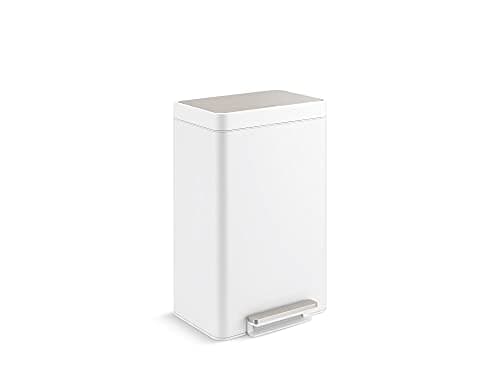
Best value stainless
Kohler 13-Gallon Stainless Steel Step Trash Can (K-20940)
The premium-feeling stainless can that does not lock you into proprietary liners — it is built around the standard 13-gallon bag.
Price as of October 16, 2026. #ad How we make money
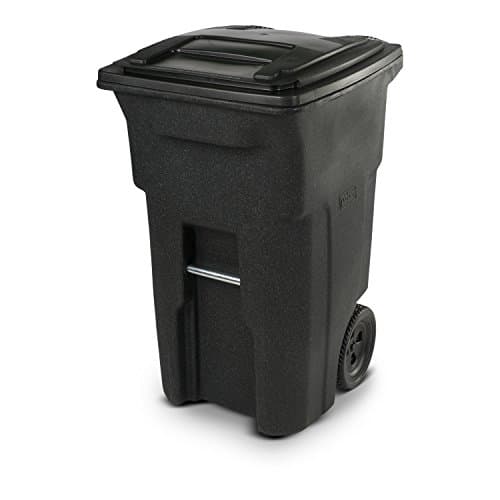
Best outdoor cart overall
Toter Heavy Duty Two-Wheel Trash Cart, 64 Gallon
The cart most municipalities issue, sold retail: rotationally molded, ten-year warranty, and a lid hinged to the body.
$186.95 · 5% off · Price as of October 16, 2026. #ad How we make money
If you came here because you were unsure which word to search, search both - and search cart as well if what you want is wheeled. The listings genuinely differ depending on which term the manufacturer's copywriter used.
Common questions
Is there a difference between a trash can and a garbage can?
Not in current American use - they mean the same object and either word is correct. Historically, garbage meant wet food waste and trash meant dry rubbish like paper and packaging, a distinction that survives in the waste industry rather than in retail.
What is the difference between trash and garbage?
In the original sense, garbage is putrescible waste - food scraps and animal matter that rots - and trash is dry refuse like paper, packaging and ash. Single-stream collection made the distinction irrelevant to households, but it still appears in municipal codes and industry usage.
Should I say trash can or garbage can?
Either. Garbage can is a little more common in the Northeast and Upper Midwest, trash can a little more common in the South and West, and neither reads as wrong anywhere in the US.
What is the difference between a wastebasket and a trash can?
A wastebasket is small, usually open-topped and intended for dry waste - the bin beside a desk. A trash can is any size and usually has a lid. Listings using wastebasket are rarely the kitchen can you are looking for.
What do you call a big wheeled garbage can?
A cart - that is the word haulers and manufacturers use for wheeled curbside containers, typically 32 to 96 gallons. Searching cart rather than can surfaces products that retail listings often bury.
Does it matter which term I search for when buying one?
Yes, in practice. Manufacturers and retailers use trash can, garbage can, bin and cart inconsistently for the same products, so searching only one term hides listings. Search both, plus the capacity you want.
Sources
Every specification on this page traces to one of these, checked at the time of writing. Where a manufacturer does not publish a figure, the page says so rather than estimating it.
Read next
- Sizes & BagsSize charts, real dimensions, and the bag-fit matrix that does not exist anywhere else.
- Trash can size chartEvery common can size in gallons, liters and quarts, with the matching bag.
- Trash bag sizes explainedThe full ladder, mil thickness explained, and the 13-to-20-gallon gap.
- Outdoor trash can sizesWhat each cart size holds, which your hauler lifts, and the practical limits.
- How many quarts is a 13-gallon trash can?52 US quarts, 49.2 liters, about 1.74 cubic feet - plus the full conversion table and the nominal-sizing caveat.
- The best kitchen trash cans of 2026Seven cans ranked on pedal durability, lid noise and bag fit — not on finish.
The author
Ryder M.
Owner and editor of Lid & Liner, published by Magoo Media Group. He started the site after getting tired of the same problem everyone has: every “best trash can” article covers ten products and none of them tells you whether a 13-gallon bag actually fits a 13-gallon can. Lid & Liner covers one category and tries to cover it completely.
Last reviewed October 6, 2026. Spotted an error? Tell us and we will correct it and note the correction.