Stainless steel vs plastic trash cans
Steel wins on one thing that genuinely matters and loses on two. The honest answer is that the material decides far less than the pedal, the damper and whether the bag fits.
By Ryder M. · Last reviewed October 4, 2026
Lid & Liner is reader-supported. If you buy through a link on this page we may earn a commission at no extra cost to you. It never changes which product we rank first — how we pick and how we make money.
The verdict, first
Buy stainless if the can lives in a kitchen you look at, if anything strongly smelling goes in it, and if you will pay for a fingerprint-resistant finish. Buy plastic if the can lives in a garage, a utility room, a rental or a bathroom, if there is a dog or a toddler who will knock it over, or if the budget is under the point where stainless is real steel rather than a thin skin over the same plastic mechanism.
| # | Product | Best for | Price |
|---|---|---|---|
| 01 | 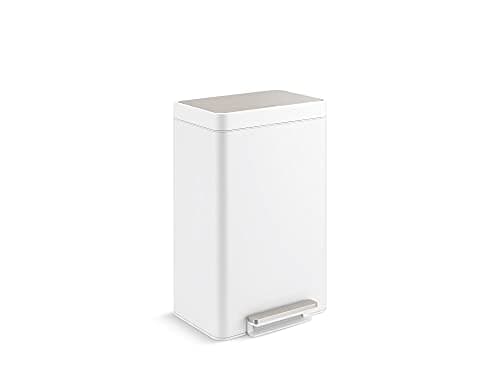 Kohler 13-Gallon Stainless Steel Step Trash Can (K-20940)The premium-feeling stainless can that does not lock you into proprietary liners — it is built around the standard 13-gallon bag. | Best value stainless | $160.99 · View on Amazon Price as of October 16, 2026. #ad How we make money |
| 02 | 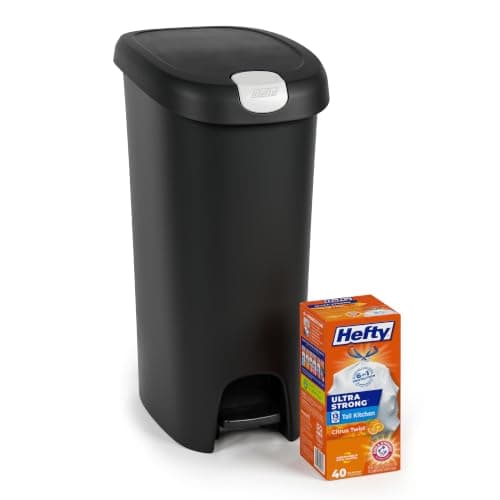 Hefty 12 Gallon Step Trash Can with Lockable LidA plastic 12-gallon step can whose lid actually locks to the body — the cheapest honest answer to a dog or a toddler in the trash. | Best cheap locking can | $36.99 · View on Amazon Price as of October 16, 2026. #ad How we make money |
| 03 | 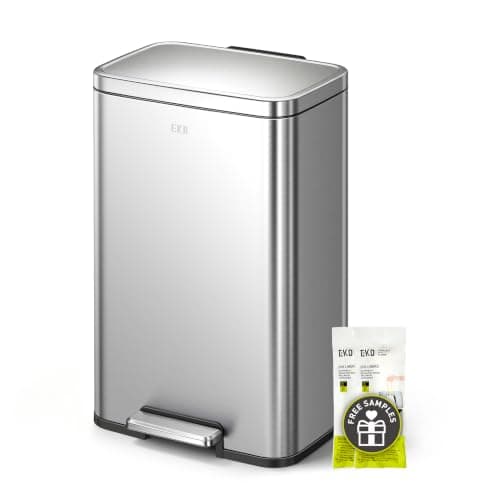 EKO Madison 13.2 Gallon Step Trash CanThe stainless step can that competes on the one spec that actually predicts lifespan — pedal cycles — without the premium-brand markup. | Best budget stainless | $89.99 · View on Amazon Price as of October 16, 2026. #ad How we make money |
| 04 | 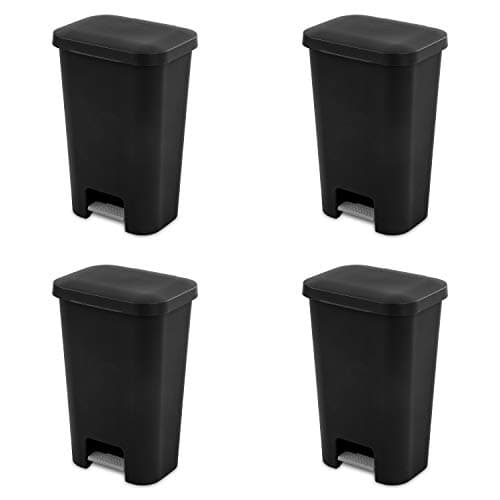 Sterilite 11.9 Gallon Large StepOn Wastebasket (4-Pack)The plain plastic step can that does the job: a pedal, a hinged lid, and room for an ordinary 13-gallon bag. | Best cheapest step can | $67.51 · View on Amazon $78.05 · 14% off · Price as of October 16, 2026. #ad How we make money |
The two steel cans and the two plastic ones above are representative rather than the only options. What this comparison is about is the material, not the model — and the honest headline is that material is the third or fourth most important thing about a kitchen can.
The two materials side by side
| Stainless steel | Plastic | |
|---|---|---|
| Absorbs odor over years | No | Yes, slowly |
| Fingerprints | Yes, unless coated | No |
| Survives being knocked over | Dents permanently | Usually unharmed |
| Scratches | Visible, permanent | Visible, less obvious |
| Weight | Heavy - harder to tip | Light - easy to move and to tip |
| Cleaning | Wipes, shows streaks | Hoses out, no streaks |
| Damp rooms | Can spot or corrode at chips | Indifferent |
| Cost for the same mechanism | Higher | Lower |
| Looks right in a visible kitchen | Yes | Depends on the kitchen |
The one real argument for steel
Plastic is porous at a scale you cannot see, and over years it takes up the odor compounds that waste produces. This is why a five-year-old plastic can can smell faintly even when it is empty and freshly washed, and why diaper pails are increasingly sold in steel. Steel does not do this. Wash a steel can and it is actually clean rather than merely emptied.
The effect is slow, and it is not a reason to replace a plastic can you already own. It is a reason to buy steel for the can that takes food waste and plastic for the can that takes packaging. If your current can smells after washing, read why a trash can still smells after cleaning before you conclude the material is the problem - residue in the base explains it far more often than the plastic does.
Steel also wins on stability, which matters more than it sounds. A heavy can does not travel across the kitchen when the lid opens, and it is harder for a dog to tip. That said, a plastic can with a lid that locks to the base beats a heavy can with a loose lid every time. Dog-proof cans, ranked.
The two real arguments for plastic
It survives being knocked over
A tipped plastic can is a mess on the floor. A tipped steel can is a mess on the floor and a permanent dent in the can, and a dented steel can never looks right again. If the can shares a room with a dog, a toddler, a bicycle or a laundry basket, that difference is the whole decision.
It cleans properly
A plastic can goes outside and gets hosed. A steel can gets wiped, and a wiped steel can shows every streak until it dries. For a can in a garage or a utility room, where what goes in it is genuinely messy, washability beats appearance. How to clean a trash can.
And a third: cheap stainless is not really the point
Below a certain price, a stainless can is a thin steel skin wrapped around the same molded plastic pedal mechanism as the budget plastic cans. You are paying for the finish rather than for durability, and you inherit the fingerprints as well. If the budget is tight, a good plastic can beats a cheap steel one. What fifty dollars actually buys.
Fingerprints, and the finishes that claim to fix them
Fingerprints are the single most common complaint about stainless cans, and they are worst on a plain mirror-brushed finish in a kitchen with children. Two things help. The first is a fingerprint-resistant or smudge-resistant coating, which most mid-price and premium cans now have — Kohler and EKO both list one, and it genuinely reduces the problem rather than eliminating it. The second is buying a non-steel colorway: black, white and dark bronze finishes show far less than brushed silver.
What does not help is the folk remedy of polishing with oil. It works for a day and then collects dust. Wipe with a damp microfiber cloth in the direction of the grain, dry it, and accept that a steel can in a working kitchen will never look like a showroom.
What actually matters more than the material
- The pedal mechanism. A steel pedal on a steel linkage outlasts a molded plastic lever on a plastic pin, and that is independent of what the body is made of. A brand that publishes a cycle rating expects it to last.
- The lid damper. An undamped lid closes with a crack every time. In an open-plan kitchen it is the most common reason a working can gets replaced early.
- Whether the bag fits. Nominal gallon figures are not dimensions, which is why a 13-gallon bag overhangs a 13-gallon can. The whole bag-fit problem.
- Whether the inner bucket comes out. A removable bucket is the difference between a two-minute clean and a twenty-minute one.
- The footprint. The can has to fit where you want it, and shape does more for that than material. Where to put a can in a small kitchen.
Decide those five first. Then pick the material, because by that point it is mostly a question of which room the can lives in and what you want to look at. The full kitchen roundup ranks cans in both materials together, which is the honest way to compare them. If you land on the plastic side, the best Sterilite trash cans, size by size is the brand that owns that end of the market.
Common questions
Is a stainless steel or plastic trash can better?
Neither is better overall. Steel does not absorb odor over years and is heavier, so it suits a kitchen can that takes food waste. Plastic survives being knocked over, hoses clean, and costs less for the same mechanism, so it suits garages, utility rooms and homes with pets or small children.
Do plastic trash cans hold smells?
Over years, yes. Plastic is porous at a microscopic scale and gradually takes up odor compounds, which is why an old plastic can can smell faintly when empty and clean. Steel does not. A new smell is almost always residue rather than the material.
Do stainless steel trash cans rust?
Rarely, and usually only where the finish has been chipped or where a painted steel can has been scratched in a damp room. Genuine stainless in a kitchen is far more likely to show water spots than rust.
How do you stop fingerprints on a stainless trash can?
Buy a fingerprint-resistant finish or a non-silver colorway, and wipe with a damp microfiber cloth along the grain and then dry. Oil-based polishes look good for a day and then collect dust.
Is a cheap stainless trash can worth it?
Usually not. At the bottom of the market the steel is a thin skin over the same plastic pedal mechanism, so you pay for the look and inherit the fingerprints. A good plastic can beats a cheap steel one.
Which material is better for a dog?
A plastic can with a lid that locks to the base. Weight helps, but a lock is what actually keeps the trash in the can when a dog gets to it, and a knocked-over plastic can does not dent.
Sources
Every specification on this page traces to one of these, checked at the time of writing. Where a manufacturer does not publish a figure, the page says so rather than estimating it.
Read next
- Kitchen Trash CansStep cans, stainless, dual recycling and compost — plus the sizing nobody explains.
- The best kitchen trash cans of 2026Seven cans ranked on pedal durability, lid noise and bag fit — not on finish.
- The best stainless steel trash cansSix stainless cans, and the finish comparison nobody publishes.
- Kitchen trash can buying guideThe five measurements to take and the emptying-habit question that sets the size.
- The best kitchen trash cans under $50Four sub-$50 kitchen cans, and an honest account of what the budget does and does not buy.
- How to clean a trash canThe full method, including the underside of the rim everyone misses.
The author
Ryder M.
Owner and editor of Lid & Liner, published by Magoo Media Group. He started the site after getting tired of the same problem everyone has: every “best trash can” article covers ten products and none of them tells you whether a 13-gallon bag actually fits a 13-gallon can. Lid & Liner covers one category and tries to cover it completely.
Last reviewed October 4, 2026. Spotted an error? Tell us and we will correct it and note the correction.