How to keep trash cans from blowing over
The can that ends up three driveways away is almost always the empty one, put out the night before, with the lid not quite shut. Fix those three things and the problem mostly disappears before you spend anything.
By Ryder M. · Last reviewed October 17, 2026
Lid & Liner is reader-supported. If you buy through a link on this page we may earn a commission at no extra cost to you. It never changes which product we rank first — how we pick and how we make money.
The short answer
Put the can out on collection morning rather than the night before, keep the heavy waste at the bottom, and make sure the lid closes completely. Those three cost nothing and solve most cases, because a wheeled cart is stable when it is loaded and acts like a sail when it is empty. If wind is a regular problem where you live, the cheap hardware fix is a tensioned strap over the lid; the permanent fix is a heavier cart with an attached, hinged lid.
Why it happens
A standard 64 or 96-gallon cart is a tall, light, hollow box with a flat side. Empty, it weighs perhaps 25 to 40 pounds with a center of gravity near its middle, and it presents several square feet of flat surface to the wind. That is the definition of a sail on castors. Fill it and two things change at once: the mass goes up substantially, and - if the heavy waste is at the bottom - the center of gravity drops. A loaded cart with weight low is remarkably hard to tip.
The second mechanism is the lid. A lid that is propped open by an overfull bag becomes a wing: wind gets under it, lifts, and takes the can with it. This is why "close the lid completely" appears in every municipal notice on the subject, and it is also why an overfilled can is less stable than a merely full one.
Six fixes, cheapest first
Step 01
Change when you put it out
Set the cart out on collection morning instead of the night before, and bring it back in as soon as it has been emptied. An emptied cart left at the curb all day is the single most likely one to travel, because it is now light and the lid is loose. If the cart is barely half full and the forecast is bad, consider skipping the week.
Step 02
Load it heavy-low and bag everything
Put the dense waste in first so the weight sits at the bottom, and bag and tie loose light material rather than tipping it in free. Loose paper and packaging is what escapes first and what you then have to collect from a neighbour's lawn.
Step 03
Make the lid shut, and keep it shut
If the lid will not close, the can is overfull - take a bag out. For a can whose lid closes but lifts in gusts, a tensioned strap or bungee lid lock over the top ends it. A strap is also the only one of these fixes that helps against animals.
Step 04
Park it somewhere the wind cannot work on it
Between the house wall and a fence, behind a gate post, or against the garage rather than free-standing in the open. Turn the handles away from the street as collection crews ask, and if your cart has a brake on one wheel, set it.
Step 05
Weight it, carefully
A paving slab or a sandbag inside the base, low down, is a legitimate ballast for a storm - but it has to come out before collection. Never leave a heavy object in a cart that an automated lifter or a crew member is about to tip, and do not put a weight on top of the lid where it will fall off.
Step 06
Buy the cart that does not do this
If you are replacing anyway, choose a cart with a hinged lid attached to the body and a heavier build. An attached lid cannot blow away or be left on the lawn, and the extra mass is worth more than any accessory. This is the fix that lasts.
What to buy, if it comes to that
Two classes of product solve this, and they solve different halves of it. A strap or bungee lid lock keeps the lid shut on a can you already own, which deals with lifting lids and escaping litter for the price of a takeaway. A heavier cart with an attached lid deals with the tipping itself, and also removes the lid as a separate object that can be lost.
The strap for a can you already own, the bungee lock as the cheap version, and the cart to buy if you are replacing one.
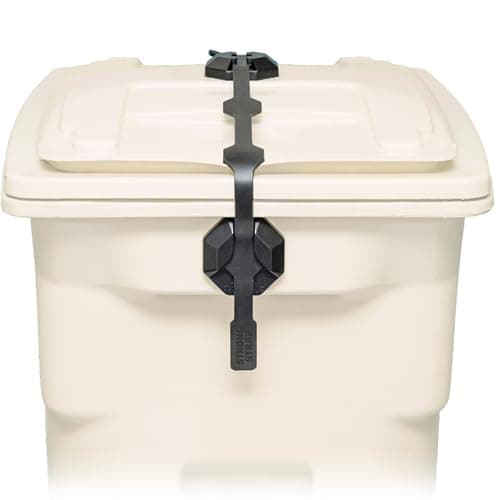
Best built strap
Blazer Brand Strong Strap Lid Lock Kit
A 48-inch strap built from materials chosen for weather: an EPDM rubber core, polycarbonate hooks and stainless fasteners.
Price as of October 17, 2026. #ad How we make money
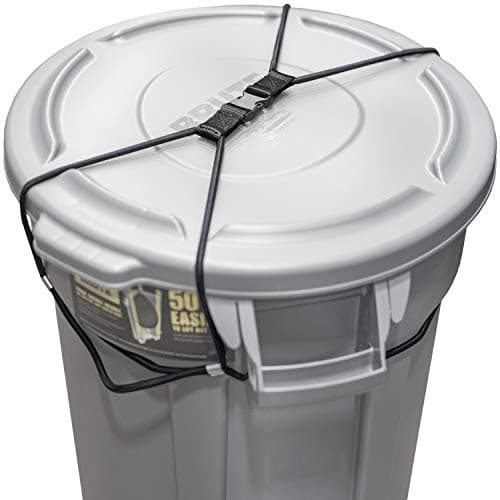
Best cheap raccoon fix
Encased Trash Can Lock, Bungee Cord (30-50 gallon cans)
A tensioned nylon bungee that holds the lid down on a can you already own, for a fraction of the cost of replacing it.
$19.99 · 15% off · Price as of October 17, 2026. #ad How we make money
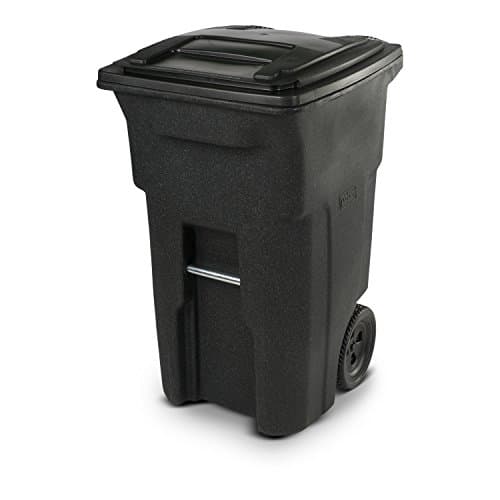
Best outdoor cart overall
Toter Heavy Duty Two-Wheel Trash Cart, 64 Gallon
The cart most municipalities issue, sold retail: rotationally molded, ten-year warranty, and a lid hinged to the body.
$186.95 · 5% off · Price as of October 17, 2026. #ad How we make money
If animals rather than weather are the real reason your can keeps ending up on its side, the strap is the right purchase but the rest of the thinking is different - the best trash can lid locks and straps ranks the hardware, and the best raccoon-proof trash cans covers cans that resist being opened rather than being blown.
What not to do
- Do not tie the cart to a fence or a post. An automated or semi-automated lifter cannot take a tethered cart, and a crew will leave it. Ballast inside beats a rope outside.
- Do not leave a brick on the lid. It falls off in the first gust, and if it is still there at collection it becomes a projectile.
- Do not put the weight high. A sandbag on top of a full bag raises the center of gravity, which is the opposite of what you want.
- Do not overfill to make it heavier. A lid that cannot close turns the can into a wing, and the bag tears when the crew tips it.
- Do not assume a wheel brake is enough. A brake stops it rolling. It does nothing about tipping, which is the failure you are trying to prevent.
One last practical note: if your cart has already blown over and the contents are gone down the street, your city's solid waste division is the right call - several run a service to identify and return displaced carts, because the cart is usually their property rather than yours.
Common questions
How do I stop my trash can from blowing over?
Put it out on collection morning rather than the night before, load the heavy waste at the bottom, and make sure the lid closes completely. If wind is a regular problem, add a tensioned strap over the lid and park the can against a wall or fence.
Why does my empty trash can blow away but the full one does not?
Because an empty cart is a tall, light, hollow box with a flat side - a sail on castors. Loading it adds mass and, if the heavy waste is at the bottom, lowers the center of gravity.
Can I put a weight in my trash can to stop it tipping?
Yes, low down inside the base, as a temporary storm measure - but take it out before collection. Never leave a heavy object in a cart that a lifter or a crew member is about to tip.
Should I tie my trash can to a post?
No. A tethered cart cannot be taken by an automated lifter and crews will leave it. Ballast inside the can is the safe version of the same idea.
Will the collection crew pick up a cart that has blown over?
Generally not. Overturned carts and loose scattered bags are usually left, and several cities ask you to phone the solid waste division if you find a displaced cart.
Which trash can is best in high wind?
A heavier cart with a hinged lid attached to the body. The attached lid cannot blow away or be left behind, and the extra mass does more for stability than any accessory you can add later.
Sources
Every specification on this page traces to one of these, checked at the time of writing. Where a manufacturer does not publish a figure, the page says so rather than estimating it.
- City of Norman, Oklahoma - Residential Collection (cart placement, lid closure, bagging light items, under-60%-full guidance)
- City of Madison, Wisconsin - high winds: wait to place trash and recycling carts out until the morning
- Toter - Two-Wheel Carts for homeowners (attached hinged lid, sizes, construction, warranty)
- Blazer Brand Strong Strap lid lock kit (EPDM core bungee, universal fit 32-96 gallon)
Read next
- Outdoor Trash CansCurbside carts, animal-proofing, enclosures and the sizes your hauler accepts.
- The best trash can lid locks and strapsFour straps and locks on fit range, materials and winter survival.
- The best outdoor trash cans with wheelsFive wheeled cans on construction, warranty and the axle that actually fails.
- The best raccoon-proof trash cansStraps and cans compared — and why the cheapest option is usually the answer.
- The best commercial trash cansSix commercial-grade containers compared on venting, rims, wheels and auto-lifter ratings - and why none of them includes a lid.
- Outdoor trash can sizesWhat each cart size holds, which your hauler lifts, and the practical limits.
The author
Ryder M.
Owner and editor of Lid & Liner, published by Magoo Media Group. He started the site after getting tired of the same problem everyone has: every “best trash can” article covers ten products and none of them tells you whether a 13-gallon bag actually fits a 13-gallon can. Lid & Liner covers one category and tries to cover it completely.
Last reviewed October 17, 2026. Spotted an error? Tell us and we will correct it and note the correction.