How many aluminum cans fit in a 13 gallon bag?
The answer is smaller than people expect uncrushed and much larger crushed, and the weight is tiny either way. Here is the arithmetic, shown rather than asserted.
By Ryder M. · Last reviewed October 17, 2026
Lid & Liner is reader-supported. If you buy through a link on this page we may earn a commission at no extra cost to you. It never changes which product we rank first — how we pick and how we make money.
The short answer
Roughly 70 to 90 standard 12-ounce cans uncrushed, and roughly 250 to 300 crushed flat. The spread is real rather than vagueness on our part: it depends entirely on how the cans settle, and a bag shaken down holds noticeably more than one filled loose. The weight surprises people more than the count does - at about 13 grams of metal per can, 80 uncrushed cans is only about 2.3 pounds, and 300 crushed cans about 8.6 pounds.
| State of the cans | Cans in a 13 gal bag | Approximate aluminum weight |
|---|---|---|
| Loose, uncrushed, not settled | About 70 | About 2.0 lb |
| Uncrushed, shaken down | About 90 | About 2.6 lb |
| Crushed flat | 250 to 300 | 7.2 to 8.6 lb |
The arithmetic, shown
We would rather show the working than hand you a number, because the number depends on assumptions you may want to change.
- The bag. A 13-gallon bag is about 49.2 liters, or about 3,000 cubic inches of nominal volume. Nominal is doing some work there - a bag in a can takes the shape of the can, and a bag hanging from a hand does not.
- The can. A standard 12-ounce beverage can is about 2.6 inches in diameter and 4.8 inches tall, so it displaces about 25 to 26 cubic inches as a cylinder.
- The packing. Cylinders tipped in at random do not fill a space: expect to use roughly 55 to 65 percent of the available volume, more if you shake the bag down so the cans nest. That gives you about 70 to 90 cans, and it is why the honest answer is a range.
- Crushing. Flattening a can reduces the volume it occupies by roughly two thirds to three quarters, which is where 250 to 300 comes from. It does not change the weight at all - the metal is the same metal.
- The weight. The Can Manufacturers Institute puts about 13 grams of metal in an average aluminum beverage can, which works out at roughly 35 empty cans to the pound.
Should you crush them?
It depends entirely on where the cans are going, and getting this wrong is the one way to lose actual money.
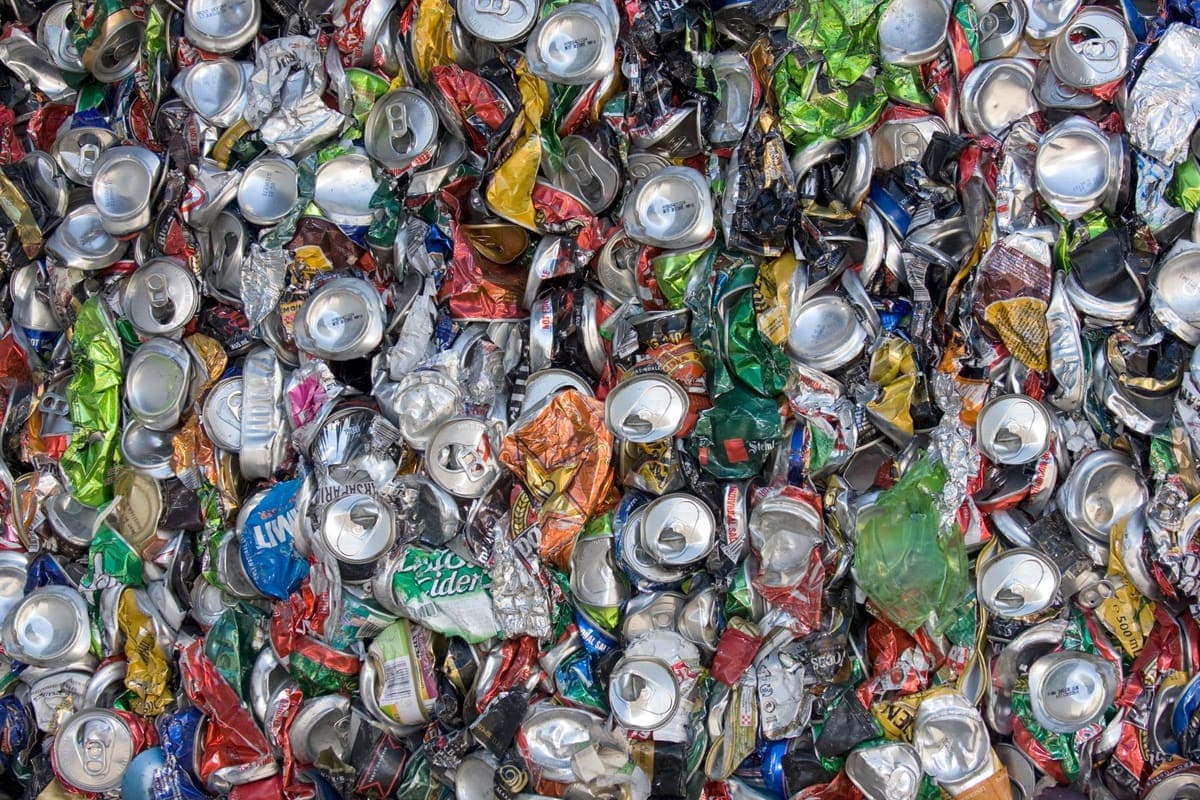
- Taking them to a scrap yard: crush them. Three to four times as many cans per bag, identical weight, far fewer trips. Nobody at a scrap yard cares what shape they are in.
- Living in a container-deposit state: do not crush them. Redemption centers generally need to identify and count whole containers, and a flattened can may be rejected. Check your own state's program before you flatten a single one - the deposit is usually worth more than the scrap value of the metal.
- Single-stream curbside recycling: do not crush them. Many material recovery facilities sort by shape as well as by material, and a flattened can can be mis-sorted as paper. Your local program's guidance is the authority here, and it varies.
- Storing them at home: crush them. This is the case where crushing genuinely helps you rather than anybody else, because the storage space is yours.
What to put them in
Cans are light, so bag strength barely matters - until a can with a sharp torn tab goes in, or until you drag the bag across concrete. That is the whole specification for this job: puncture resistance at the bottom, and enough film to tie.
Two 13-gallon bags with reinforced bottoms, and the vented 32-gallon container to collect in if you are saving cans for a scrap run rather than bagging them weekly.
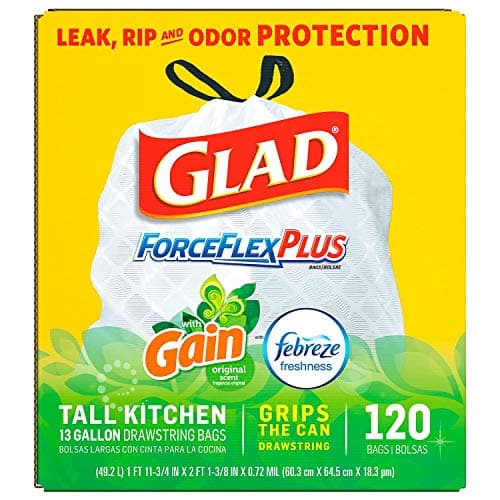
Best overall bag
Glad ForceFlexPlus Tall Kitchen Drawstring Trash Bags, 13 Gallon
The 13-gallon bag to buy if yours keep splitting: two layers of stretch film, double side seams and a reinforced bottom.
Price as of October 17, 2026. #ad How we make money
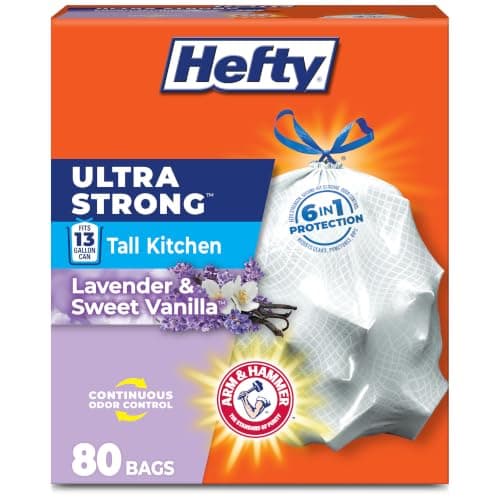
Best for odor
Hefty Ultra Strong Tall Kitchen Trash Bags, 13 Gallon
The main alternative to Glad, with odor control worked into the film rather than added as a scent strip.
Price as of October 17, 2026. #ad How we make money
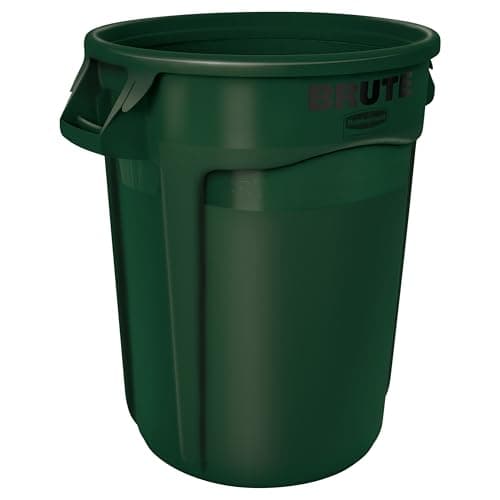
Best for bag removal
Rubbermaid Commercial BRUTE 32 Gallon Vented Container
The commercial standard, and the only can here that solves the vacuum-stuck bag properly.
If you are collecting cans in volume, the container is the better purchase than the bag: a 32-gallon vented container holds roughly two and a half times what a 13-gallon bag does, and the venting channels mean a full liner lifts out instead of fighting a vacuum. The best commercial trash cans covers that class, and the best 13-gallon trash bags ranks the bags.
Common questions
How many aluminum cans fit in a 13 gallon trash bag?
About 70 to 90 uncrushed 12-ounce cans, or about 250 to 300 if they are crushed flat. The range reflects how much the cans settle rather than uncertainty about the bag.
How much does a 13 gallon bag of aluminum cans weigh?
About 2 to 2.6 pounds uncrushed and about 7 to 9 pounds crushed. Crushing does not change the weight of a given number of cans - only how many fit.
How many aluminum cans make a pound?
About 35. The Can Manufacturers Institute puts roughly 13 grams of metal in an average aluminum beverage can, and there are 453.6 grams in a pound.
Should I crush cans before recycling?
Crush them for a scrap yard or for storage. Do not crush them if you are redeeming a deposit, or if your curbside program sorts by shape - a flattened can can be rejected or mis-sorted.
How many cans fit in a 32 gallon can?
Roughly 170 to 220 uncrushed, scaling the same packing arithmetic up from a 13-gallon bag. Crushed, several times that.
Do I need to rinse cans before bagging them?
Yes, if the bag will sit for more than a day or two. Sugar residue in unrinsed cans is a classic fruit fly source, and most recycling guidance asks for containers to be rinsed anyway.
Sources
Every specification on this page traces to one of these, checked at the time of writing. Where a manufacturer does not publish a figure, the page says so rather than estimating it.
- Can Manufacturers Institute - recycling impact calculator information (about 13 grams of metal in an average aluminum beverage can)
- The Aluminum Association - UBC annual recycling rates, 2010-2020 (cans per pound and recycling rate data)
- US EPA - National overview: facts and figures on materials, wastes and recycling
- US EPA - Reduce school pests by properly handling waste (rinsing recyclables, container management)
Read next
- Sizes & BagsSize charts, real dimensions, and the bag-fit matrix that does not exist anywhere else.
- The best 13-gallon trash bagsSix bags compared on construction, thickness and the dimensions that decide fit.
- Trash bag sizes explainedThe full ladder, mil thickness explained, and the 13-to-20-gallon gap.
- 13-gallon trash can dimensionsReal dimensions by can style, including the lid-open height nobody measures.
- The best commercial trash cansSix commercial-grade containers compared on venting, rims, wheels and auto-lifter ratings - and why none of them includes a lid.
- Trash can fruit fliesFind the breeding site first, then trap. The order is the whole fix.
The author
Ryder M.
Owner and editor of Lid & Liner, published by Magoo Media Group. He started the site after getting tired of the same problem everyone has: every “best trash can” article covers ten products and none of them tells you whether a 13-gallon bag actually fits a 13-gallon can. Lid & Liner covers one category and tries to cover it completely.
Last reviewed October 17, 2026. Spotted an error? Tell us and we will correct it and note the correction.